Saccharide Isomerate and glycerin (glycerol) are widely used cosmetic humectants, but they differ significantly in molecular structure, skin interaction, substantivity, and typical formulation role.
| Property | Saccharide Isomerate | Glycerin |
| INCI name | Saccharide Isomerate | Glycerin |
| Chemical nature | Mixture of carbohydrate-derived sugars/isomers | Simple polyol (3-carbon triol) |
| Main role | Humectant + long-lasting moisturization | Humectant |
| Molecular size | Mixture of relatively small carbohydrate molecules | Very small molecule |
| Water binding | Strong | Very strong |
| Skin substantivity | High; can associate strongly with the stratum corneum | Moderate; readily moves/redistributes |
| Persistence after rinsing | Relatively high | Relatively low |
| Immediate hydration | Good | Excellent |
| Long-lasting hydration | Excellent | Good |
| Skin feel | Usually smooth, comfortable, less tacky at suitable levels | Can become sticky/tacky at higher levels |
| Sensitive-skin suitability | Generally well tolerated | Generally well tolerated |
| Hair-care use | Hydration and conditioning support | Humectancy and moisture retention |
| Typical formulation position | Premium/long-lasting moisturizing active | Basic, economical humectant |
| Cost | Generally higher | Very low |
| Formulation versatility | Good | Excellent |
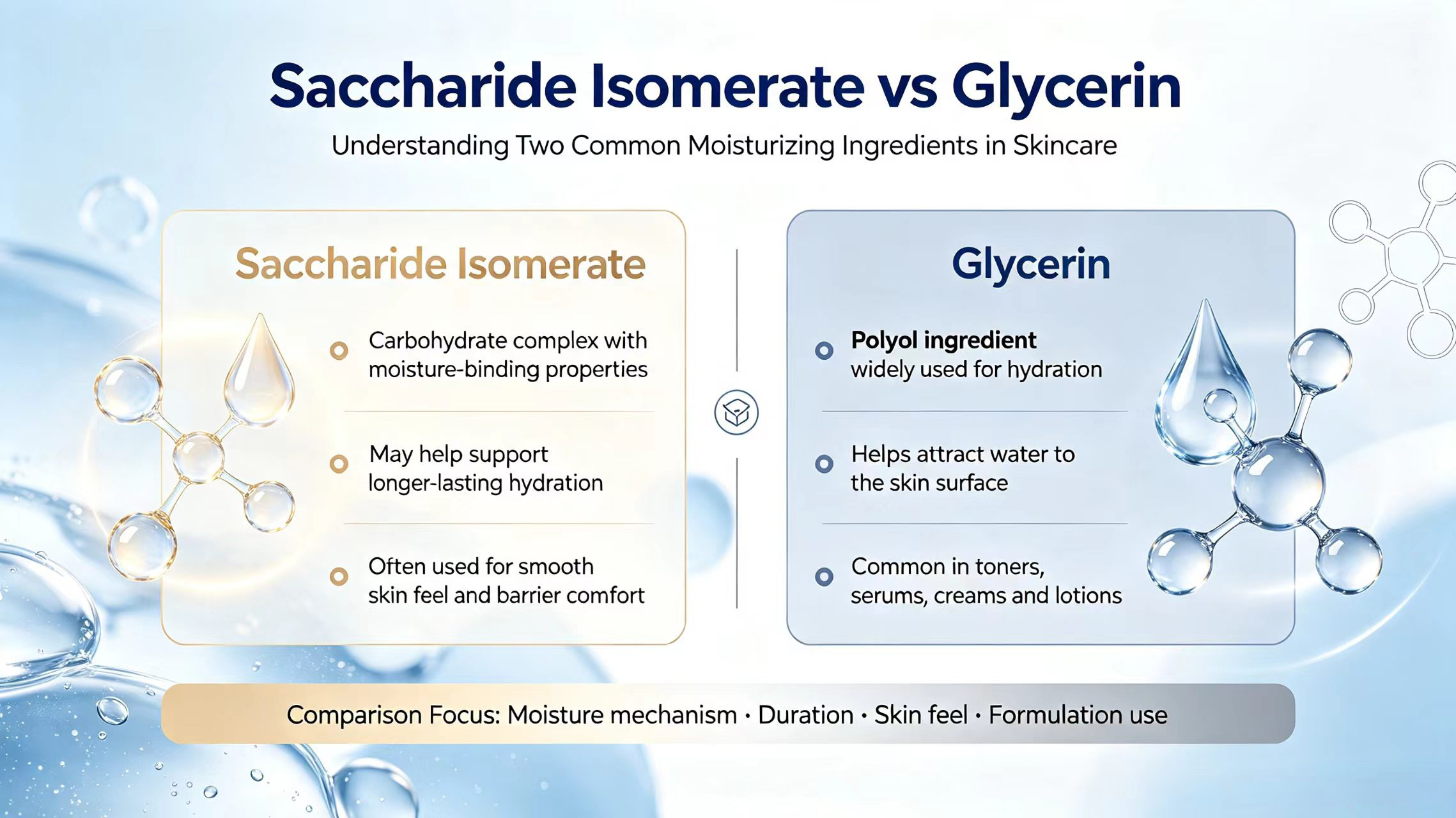
1. How their mechanisms differ
Glycerin works primarily by attracting and retaining water. Because it is a small, highly hydrophilic molecule, it can increase water content in the outer layers of the skin and improve skin softness and flexibility.
Saccharide Isomerate is also a humectant, but its carbohydrate-derived components have a stronger tendency to associate with the skin surface. This gives it an important advantage: moisturization can persist longer, including after washing, depending on the formulation.
In simplified terms:
Glycerin → rapid and effective water attraction
Saccharide Isomerate → water attraction + stronger skin substantivity
2. Which provides better moisturization?
It depends on what “better” means.
- Immediate hydration: Glycerin is excellent.
- Long-lasting hydration: Saccharide Isomerate generally has an advantage.
- After-rinse moisturization: Saccharide Isomerate is usually more attractive.
- Cost-effective everyday hydration: Glycerin wins.
- Premium moisturizing claims: Saccharide Isomerate is often preferred.
Saccharide Isomerate is particularly interesting for products where the formulator wants persistent moisturization rather than simply adding a large amount of conventional humectant.
3. Skin-care applications
Glycerin is extremely versatile and can be found in:
- Moisturizers
- Serums
- Cleansers
- Toners
- Hand creams
- Body lotions
- Masks
- Soaps
- Shampoos
Saccharide Isomerate is particularly useful in:
- Moisturizing creams
- Hydrating serums
- Facial lotions
- Sensitive-skin products
- After-cleansing products
- Body-care products
- Long-lasting moisturizing formulations
4. Hair-care comparison
For hair, glycerin is an inexpensive and effective humectant that helps attract moisture and can improve softness.
Saccharide Isomerate can provide longer-lasting hydration and conditioning support, making it interesting for:
- Dry or dehydrated hair
- Shampoos
- Conditioners
- Leave-in conditioners
- Hair masks
- Scalp-care formulations
However, glycerin is usually much more economical and easier to formulate with.
5. Can they be used together?
Yes—and this can be a very effective approach.
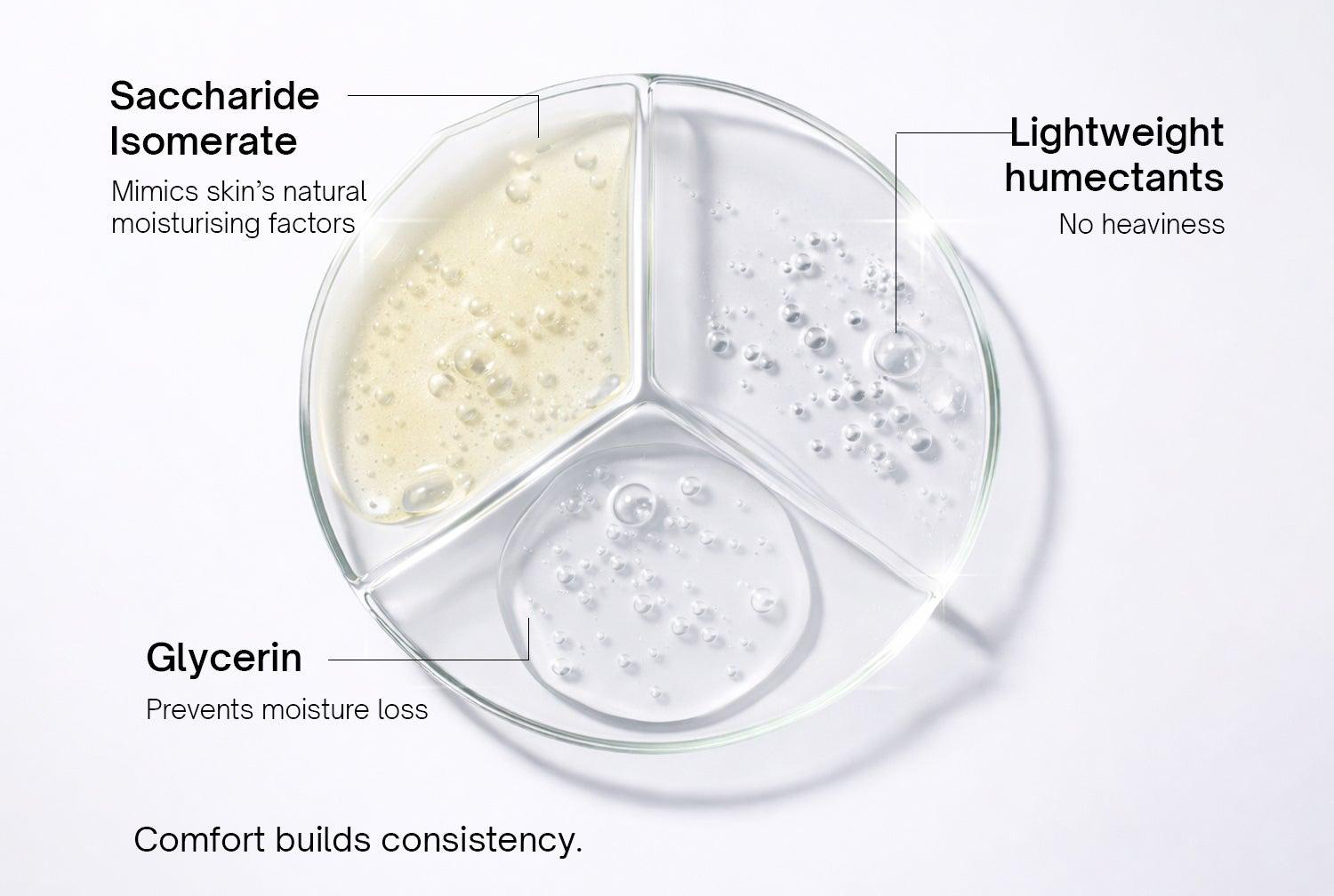
A formulation can use glycerin for strong, readily available humectancy while using Saccharide Isomerate to contribute longer-lasting skin hydration.
For example, conceptually:
Glycerin = immediate moisture attraction
Saccharide Isomerate = persistent moisture retention/substantivity
This combination can be more useful than simply increasing glycerin concentration, particularly when excessive glycerin would make the product feel sticky.
Bottom line
Glycerin is the better general-purpose humectant; Saccharide Isomerate is the more specialized long-lasting moisturizing active.
If the priorities are low cost, simplicity, and strong immediate humectancy, choose glycerin.
If the priorities are long-lasting hydration, skin substantivity, post-rinse moisturization, and a premium moisturizing concept, Saccharide Isomerate has an advantage.
For many advanced formulations, using both together is arguably the best strategy.
From cellsbio health technology co.,ltd
评论
发表评论