Pyridoxal-5-Phosphate (PLP), the active form of vitamin B6, isn’t a “core” lipid-pathway cofactor like NADPH or CoA—but it plays important supporting and regulatory roles in lipid and fatty-acid metabolism, mainly through amino-acid interconversions, signaling lipids, and one-carbon metabolism. Here’s the clean breakdown:
1. Sphingolipid metabolism (the most direct role)
This is Pyridoxal-5-Phosphate is most direct and essential involvement in lipid metabolism.
Serine palmitoyltransferase (SPT)
- Pyridoxal-5-Phosphate-dependent enzyme
- Catalyzes the first and rate-limiting step of sphingolipid synthesis:
Serine + Palmitoyl-CoA → 3-Ketosphinganine
Why this matters
Sphingolipids (ceramides, sphingomyelin, glycosphingolipids) are critical for:
- Cell membranes
- Myelin sheath formation
- Cell signaling and apoptosis
Pyridoxal-5-Phosphate deficiency → impaired sphingolipid synthesis → neurological dysfunction
This is the strongest, textbook-level link between Pyridoxal-5-Phosphate and lipid metabolism.
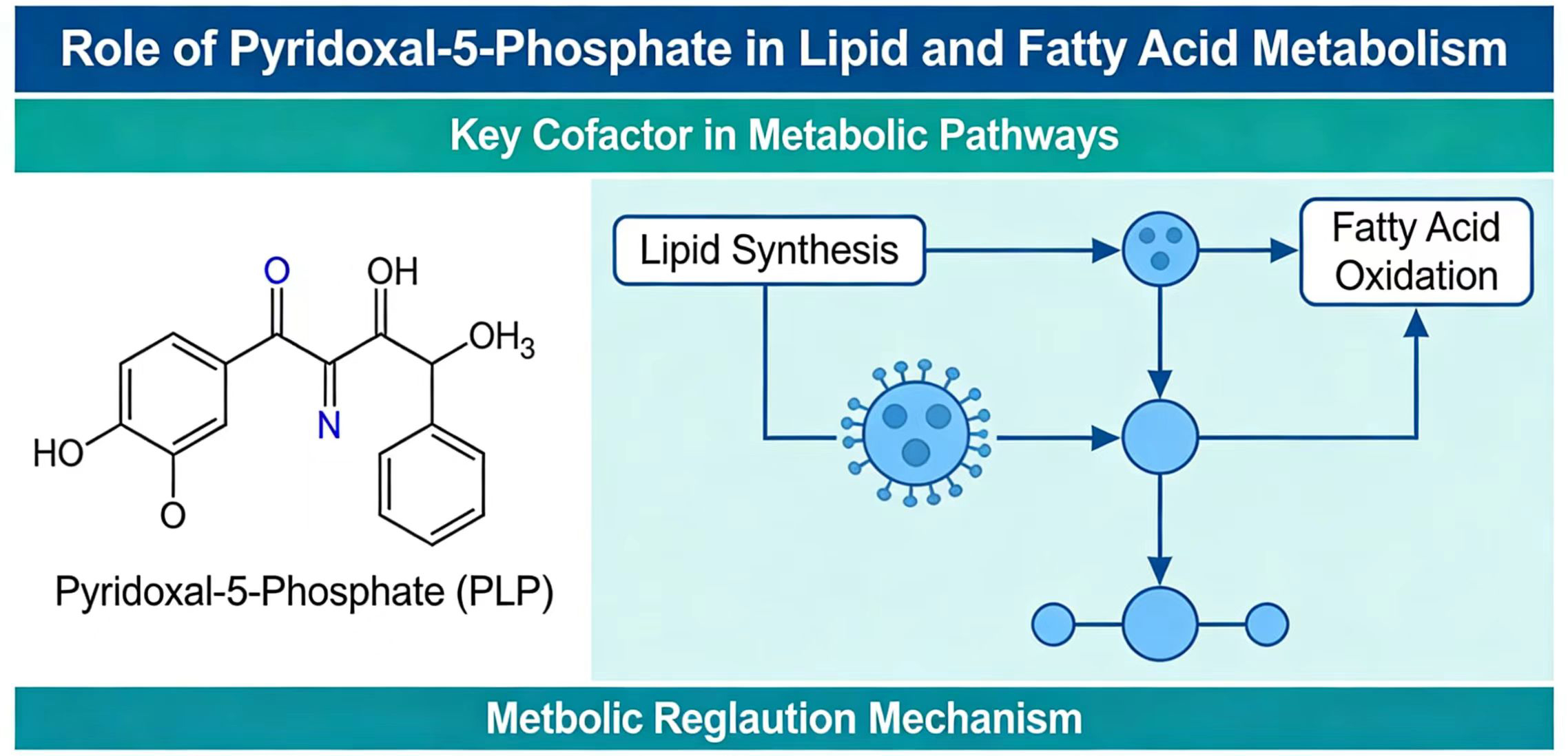
2. Fatty acid transport & oxidation (indirect)
Pyridoxal-5-Phosphate supports fatty-acid metabolism by enabling amino acid pathways that feed into energy metabolism.
Transamination reactions
Pyridoxal-5-Phosphate is a cofactor for aminotransferases
These reactions generate:
- Acetyl-CoA
- Succinyl-CoA
- Pyruvate
These intermediates:
- Fuel the TCA cycle
- Support β-oxidation efficiency
- Help maintain energy balance during fasting or high fat use
3. Regulation of lipid synthesis via one-carbon metabolism
Pyridoxal-5-Phosphate participates in pathways that control lipid synthesis at the gene and methylation level.
Key PLP-dependent enzymes
- Serine hydroxymethyltransferase
- Cystathionine β-synthase
Downstream effects
Maintains SAM (S-adenosylmethionine) levels
Proper methylation of:
- Phosphatidylcholine (via PEMT pathway)
- Lipid-metabolism genes
Low Pyridoxal-5-Phosphate→ impaired methylation → altered lipid profiles
4. Phospholipid metabolism and membrane integrity
Pyridoxal-5-Phosphate contributes to:
Serine availability (for phosphatidylserine synthesis)
Interconversion of amino acids used in:
- Phosphatidylethanolamine
- Phosphatidylcholine
This supports:
- Membrane fluidity
- Lipoprotein assembly (especially VLDL)
5. Lipid signaling and inflammation
Pyridoxal-5-Phosphate helps regulate lipid-derived signaling molecules indirectly by:
- Controlling homocysteine levels
- Modulating inflammatory lipid mediators
Pyridoxal-5-Phosphate deficiency has been associated with:
- Elevated triglycerides
- Altered HDL/LDL ratios
- Increased inflammatory lipid signaling
6. Clinical and metabolic implications
When Pyridoxal-5-Phosphate is insufficient:
↓ Sphingolipid synthesis
Altered membrane lipid composition
Dysregulated fatty acid oxidation
Increased risk of:
- Atherosclerosis
- Fatty liver
- Insulin resistance
Quick summary table
| Area | Role of Pyridoxal-5-Phosphate |
| Sphingolipid synthesis | Direct cofactor (SPT) |
| Fatty acid oxidation | Indirect (energy intermediates) |
| Lipid synthesis regulation | Methylation control |
| Phospholipid metabolism | Amino acid supply |
| Lipid signaling | Inflammation modulation |
If you want, I can:
- Compare Pyridoxal-5-Phosphate vs other B vitamins in lipid metabolism
- Explain Pyridoxal-5-Phosphate deficiency effects on fatty liver or atherosclerosis
- Turn this into a figure or exam-ready summary
Just tell me how deep you want to go
From cellsbio health technology co.,ltd
评论
发表评论