Polydeoxyribonucleotide (PDRN) works mainly as a pro-regenerative and anti-inflammatory DNA fragment system. Its effects are not because it acts as genetic material, but because it is enzymatically broken down into nucleotides that trigger cellular repair pathways.
1. Primary Mechanism: Adenosine A2A Receptor Activation
Key pathway
One of the most important mechanisms of PDRN is its indirect activation of the:
Adenosine A2A receptor (A2A receptor pathway)
How it happens:
- Polydeoxyribonucleotide (PDRN) is degraded by extracellular nucleases
- Breakdown produces deoxyribonucleotides → nucleosides → purines
- These metabolites increase adenosine availability
- Adenosine activates A2A receptors on cell surfaces
Effects of A2A receptor activation
Activation leads to:
- ↓ Pro-inflammatory cytokines (TNF-α, IL-6, IL-1β)
- ↓ NF-κB signaling (inflammation pathway suppression)
- ↑ VEGF (vascular endothelial growth factor)
- ↑ Tissue perfusion and oxygenation
- ↑ Fibroblast proliferation
- ↑ Collagen synthesis
Net effect: reduced inflammation + enhanced tissue regeneration
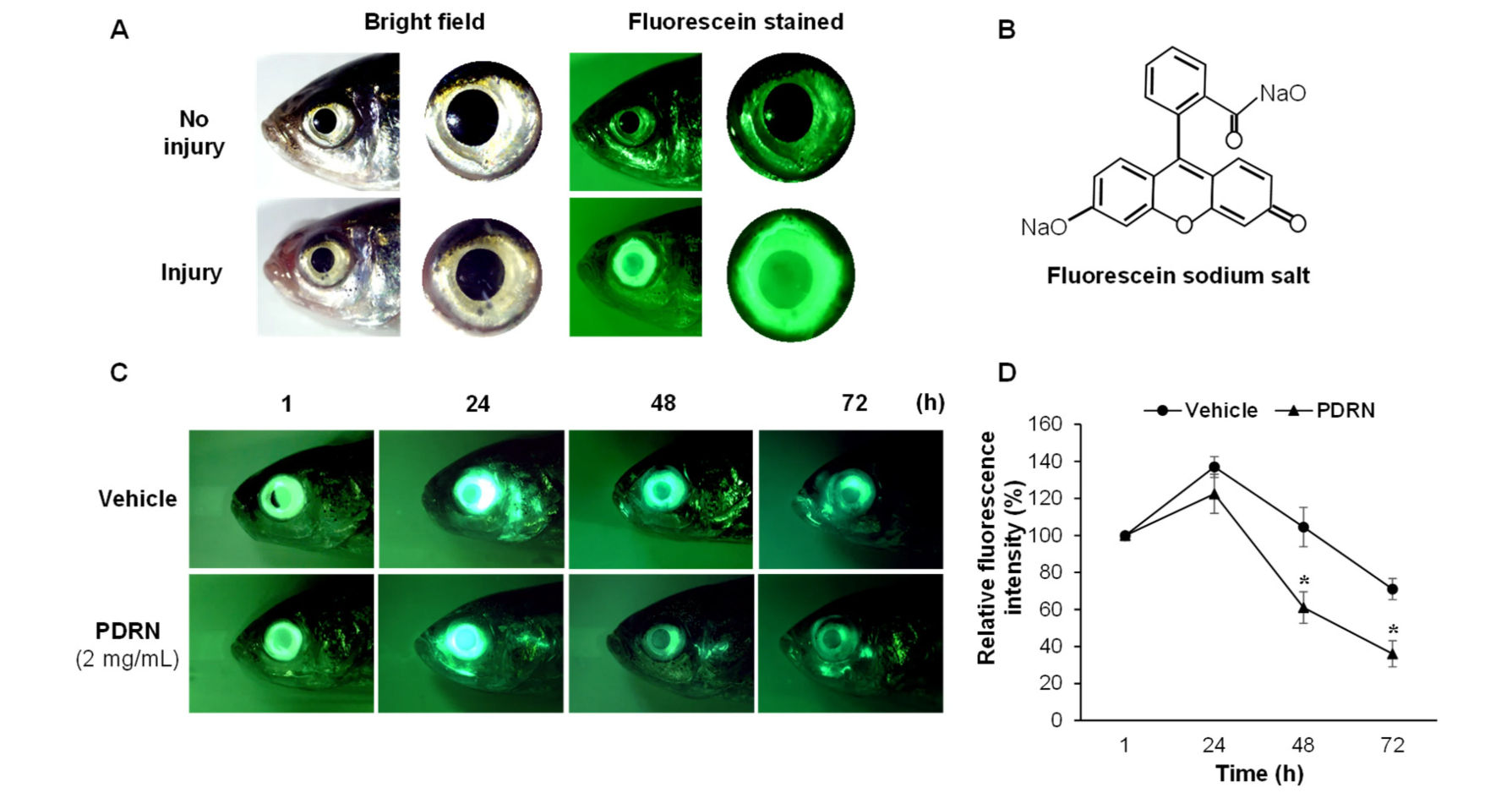
2. Nucleotide Salvage Pathway (DNA Repair Support)
When Polydeoxyribonucleotide (PDRN) is broken down:
Stepwise process:
Polydeoxyribonucleotide (PDRN) → nucleotides (A, T, C, G)
Nucleotides enter salvage pathways
Cells reuse them to:
- Repair damaged DNA
- Support rapid cell division
- Increase metabolic recovery in injured tissues
Biological meaning
This is especially important in:
- Wound healing
- Skin regeneration
- Ischemic tissue recovery
3. Angiogenesis Promotion (New Blood Vessel Formation)
Polydeoxyribonucleotide (PDRN) strongly stimulates:
VEGF (Vascular Endothelial Growth Factor)
- Promotes endothelial cell growth
- Enhances microcirculation
- Improves oxygen delivery to damaged tissue
Result:
- Faster wound closure
- Improved tissue remodeling
- Better scar quality
4. Anti-inflammatory Mechanism
Polydeoxyribonucleotide (PDRN) reduces inflammation through multiple routes:
Inhibits:
- TNF-α
- IL-1β
- IL-6
- Reactive oxygen species (ROS)
Enhances:
- IL-10 (anti-inflammatory cytokine)
- Tissue repair mediators
Key pathway:
- A2A receptor activation → suppression of NF-κB → reduced inflammatory cascade
5. Fibroblast Activation and Collagen Production
Polydeoxyribonucleotide (PDRN) stimulates dermal and connective tissue repair:
- ↑ Fibroblast proliferation
- ↑ Collagen type I and III synthesis
- ↑ Extracellular matrix (ECM) remodeling
Outcome:
- Improved skin elasticity
- Faster scar remodeling
- Tissue strengthening
6. Cellular Energy and Repair Enhancement
By increasing nucleotide availability, Polydeoxyribonucleotide (PDRN):
- Supports ATP synthesis indirectly
- Improves cell survival under stress
- Enhances DNA replication in regenerating cells
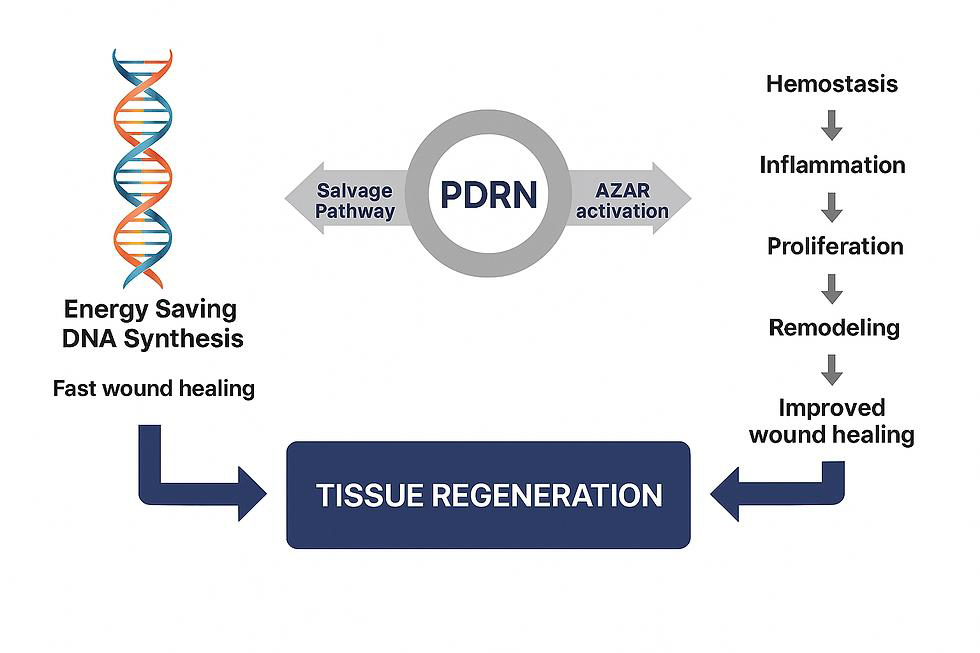
Core Mechanistic Idea
Polydeoxyribonucleotide (PDRN) works through a dual biological system:
1. Signal pathway modulation
- Adenosine A2A receptor activation
- Anti-inflammatory + pro-angiogenic effects
2. Raw material supply
- Nucleotides used for DNA repair and cell proliferation
Key Takeaway
Polydeoxyribonucleotide (PDRN) is not a drug that directly “acts on DNA,” but rather a biological stimulator that:
- Reduces inflammation via adenosine signaling
- Enhances tissue regeneration via nucleotide recycling
- Promotes healing through angiogenesis + fibroblast activation
If you want, I can next compare Polydeoxyribonucleotide (PDRN) vs hyaluronic acid vs growth factors (EGF/FGF) or explain why PDRN is used in skin boosters and post-laser recovery protocols.
From cellsbio health technology co.,ltd
评论
发表评论