Magnesium Acetyl Taurate and Magnesium L-Aspartate so you can decide which one might be more suitable for your needs:
Magnesium Acetyl Taurate
What it is:
A newer magnesium form where magnesium is bound to acetylated taurine (an amino acid derivative).
Key Features & Benefits
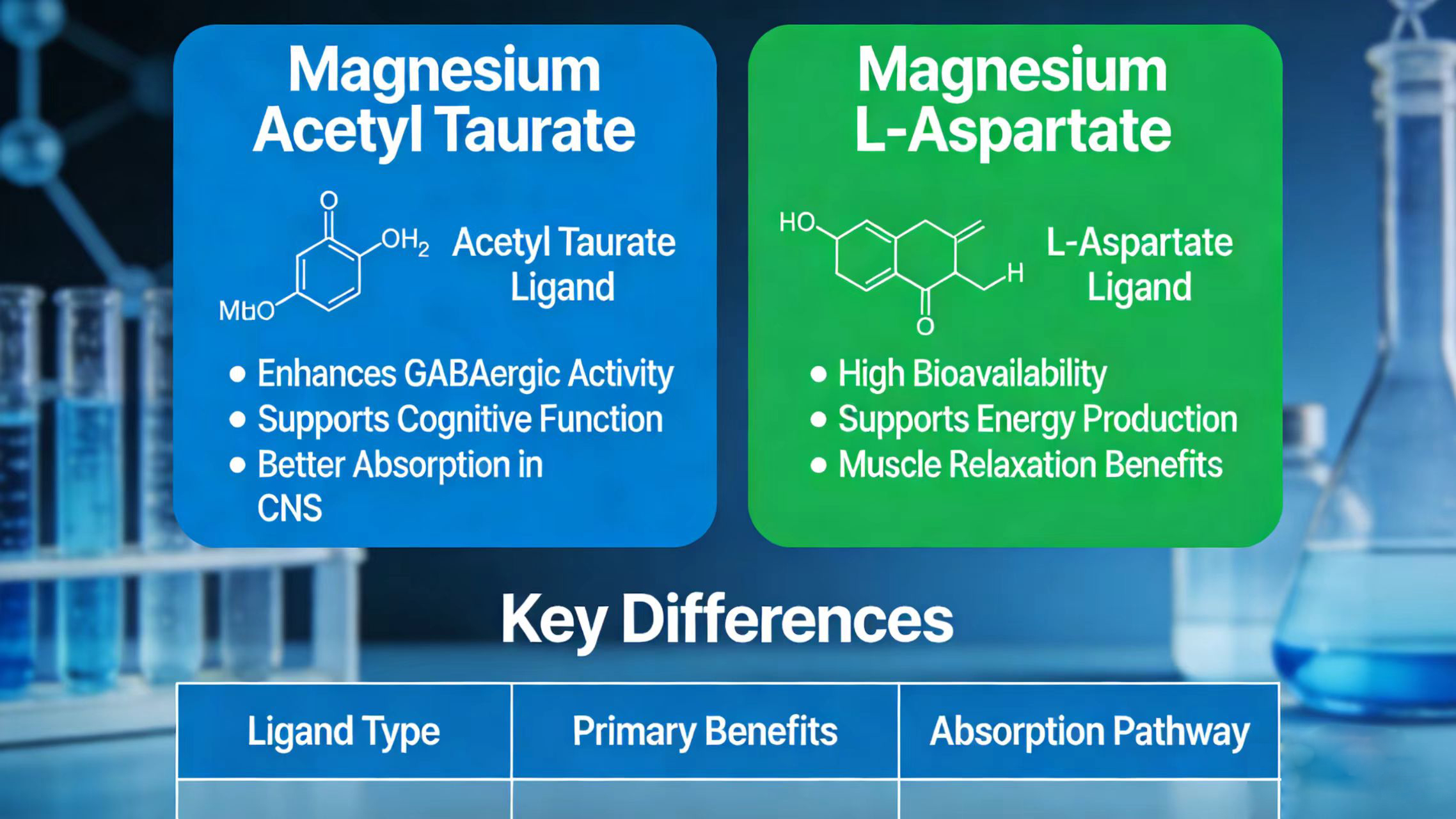
- Brain & Nervous System Focus: Designed for cognitive and neurological support. Taurine plus the acetyl group may help magnesium cross into brain cells more effectively and support neurotransmission, relaxation, and mental clarity.
- Cardiovascular Support: Taurine can help with blood pressure regulation and vascular health — and magnesium adds to these effects.
- Potentially Higher Bioavailability: Some sources suggest the acetylated component might improve absorption and cellular uptake compared to basic forms (though direct human trials are limited).
- Gentler on the Gut: Anecdotally reported to cause fewer GI side effects than some traditional magnesium salts.
Best For
- People focused on cognitive support, stress resilience, and nervous system health.
- Those interested in magnesium patterns tied to mental clarity or relaxation.
Considerations
- Still a less common and newer supplement form with fewer large‑scale clinical studies compared to classic magnesium salts.
Magnesium L-Aspartate
What it is:
Magnesium bound to L-Aspartic Acid, an amino acid. This form is widely used as a dietary magnesium supplement.
Key Features & Benefits
- High Bioavailability: Magnesium Aspartate dissolves well in water and is generally absorbed efficiently compared to less soluble forms like magnesium oxide.
- General Magnesium Supplementation: Useful if you need to address or prevent magnesium deficiency.
- Muscle Function & Energy: Aspartate is involved in cellular energy metabolism, so this form can be beneficial for muscle performance, reducing cramps, and fatigue (common general uses).
- Simple & Functional: Usually well‑tolerated and widely available as a basic magnesium supplement.
Best For
- People who want a basic, well‑absorbed magnesium form for everyday deficiency support.
- Those focusing on muscle relaxation, energy production, and general health benefits (heart rhythm, nerve/muscle function).
Considerations
- Not specifically targeted for brain or stress focus like some specialized forms (e.g., acetyl taurate or L‑threonate).
- May still cause digestive effects (e.g., mild diarrhea) if taken in high doses.
Quick Comparison
| Feature / Goal | Magnesium Acetyl Taurate | Magnesium L Aspartate |
| Bioavailability | Good (potentially enhanced) | Good, well absorbed |
| Brain / Cognitive Support | ⭐⭐ (specialized) | ⭐ (general) |
| Heart / Cardiovascular | Moderate (taurine supports heart) | Moderate (basic Mg support) |
| Muscle / Energy Function | Moderate | ⭐⭐ (aspartate helps with energy processes) |
| Common Use | Targeted supplementation | General magnesium deficiency support |
| Availability | Less common | Widely available |

How to Choose
- Pick Magnesium Acetyl Taurate if your goal is brain health, stress/anxiety modulation, or nervous system focus.
- Pick Magnesium L-Aspartate if you want an effective everyday magnesium supplement for muscle support, energy, and general deficiency correction.
Side Effects & Safety (General Notes)
- Magnesium supplements can sometimes cause loose stools, diarrhea, or stomach upset at higher doses — this is true for many forms.
- Always consult a healthcare provider about dosage, especially if you have kidney issues or take other medications.
If you want, I can also compare these forms with Magnesium L‑Threonate or Magnesium Glycinate to give you a broader picture for cognitive vs. relaxation vs. general health uses!
From cellsbio health technology co.,ltd
评论
发表评论