跳至主要内容

How does Matrixyl 3000 stimulate skin collagen synthesis?

 Matrixyl 3000 stimulates skin collagen synthesis through a biological signaling mechanism that encourages dermal fibroblasts (the cells that make collagen) to produce more extracellular matrix proteins, including collagen. It’s a cosmetic peptide complex made of two engineered peptides — palmitoyl tripeptide-1 and palmitoyl tetrapeptide-7 — that mimic natural skin repair signals.

How Matrixyl 3000 Works

1. Peptide Components & Mimicry

Matrixyl 3000 is a blend of two palmitoylated peptides — Palmitoyl Tripeptide-1 and Palmitoyl Tetrapeptide-7. These are short amino-acid chains linked to a fatty (palmitic) acid to improve skin penetration.

  • Palmitoyl Tripeptide-1 mimics natural collagen breakdown fragments. The skin interprets these fragments as a signal that collagen is being lost or damaged, which activates repair pathways.
  • Palmitoyl Tetrapeptide-7 helps reduce inflammation and protect existing collagen from degradation (while also supporting repair processes).
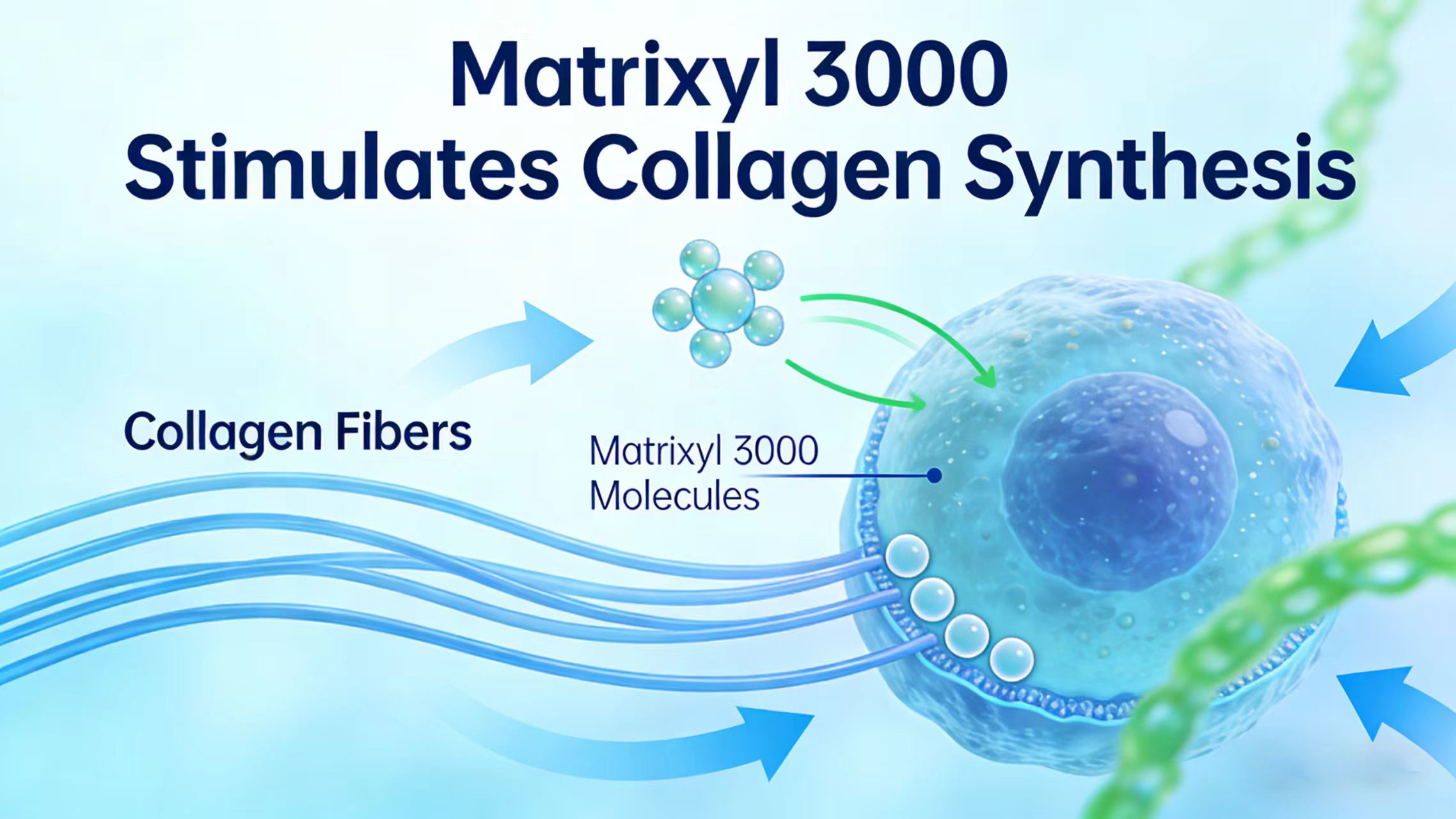
How does Matrixyl 3000 stimulate skin collagen synthesis?

2. Activation of Fibroblasts & Gene Expression

These peptides interact with fibroblast cell surface receptors, triggering intracellular signaling pathways (including TGF-β-like mechanisms) that upregulate the transcription of collagen genes (especially types I and III) and other extracellular matrix proteins (e.g., fibronectin).  This signaling encourages fibroblasts to produce more collagen rather than just maintaining baseline levels.

3. Mimicking Repair Signals (Matrikines)

Matrixyl works similarly to matrikines — naturally occurring peptides released during tissue remodeling. By acting like these endogenous messengers, Matrixyl tricks skin cells into activating repair programs, including collagen synthesis, elastin production, and glycosaminoglycan (like hyaluronic acid) synthesis.

4. Synergistic Effects

The combination of stimulating new collagen production and reducing inflammatory collagen breakdown creates a net increase in collagen content in the dermis, which can translate into smoother, firmer skin with reduced wrinkle appearance over time.


Summary Mechanism

  • Signal mimicry: Peptides imitate fragments of broken-down collagen, prompting repair responses.
  • Fibroblast activation: Stimulates gene expression for collagen and extracellular matrix proteins.
  • Inflammation modulation: Reduces inflammatory signals that can accelerate matrix degradation.
  • Net effect: More collagen synthesis + reduced breakdown → firmer and smoother skin over time.

Essentially, Matrixyl 3000 “signals” the skin to behave as if it needs to repair and rebuild, thereby increasing the production of collagen and other structural components that give skin strength and elasticity.

From cellsbio health technology co.,ltd

评论

此博客中的热门博文

Basic information of Collagen and Where you can buy Collagen CAS#9064-67-9?

  Collagen   is the most abundant protein in the human body, making up about 30% of the body’s total protein content. It plays a crucial role in providing structure, strength, and elasticity to various tissues and organs, including the skin, bones, tendons, ligaments, blood vessels, and even the cornea of the eyes. Types of Collagen There are at least 28 types of collagen, but the most common types are: Type I:  The most abundant form, found in skin, bones, tendons, and ligaments. Type II:  Found in cartilage and helps provide joint support. Type III:  Found in the skin, muscles, and blood vessels, often present alongside type I collagen. Type IV:  Found in the layers of the skin and the kidneys. Type V:  Found in the cornea of the eye, hair, and placenta. Structure of Collagen Collagen is made up of amino acids, primarily glycine, proline, and hydroxyproline. These amino acids form a triple-helix structure, which provides the tensile strength and...

How best to use the Hericium Erinaceus Capsule?

  Hericium erinaceus, commonly known as lion’s mane mushroom, is a type of edible and medicinal mushroom with potential health benefits. Lion’s mane mushroom is often consumed in various forms, including capsules, powders, extracts, and as a whole food. If you have lion’s mane mushroom in capsule form ( Hericium erinaceus capsule ), here are some tips on how to use them effectively: Follow Dosage Instructions:  The dosage can vary depending on the concentration of the active ingredients in the capsules and individual factors such as age, weight, and health condition. Always follow the recommended dosage instructions provided on the product packaging or by a healthcare professional. Consistency is Key:  Like many supplements, lion’s mane may take time to produce noticeable effects. Consistent use over time is often more effective than sporadic usage. Stick to a regular dosing schedule to maximize the potential benefits. Take with Food:  It’s generally recommended to t...

Comprehensive study on White Willow Extract

Studying   white willow extract   involves exploring its botanical properties, historical uses, active compounds, potential health benefits, and safety considerations. Here’s a comprehensive overview: Botanical Overview: Scientific Name:  Salix alba Common Names:  White willow, European willow Description:  A deciduous tree native to Europe and Asia, known for its slender leaves and grayish bark. Active Compounds: Salicin:  Primary active compound, a natural precursor to salicylic acid. Flavonoids:  Including flavonols and catechins, contributing to antioxidant properties. Phenolic Glycosides:  Various compounds with potential health benefits. Historical Use: Traditional Medicine:  Used for centuries in traditional European and Asian medicine for pain relief, fever reduction, and inflammatory conditions. Health Benefits and Current Research: Pain Relief:  Acts similarly to aspirin in relieving pain and inflammation due to salicin’s conve...