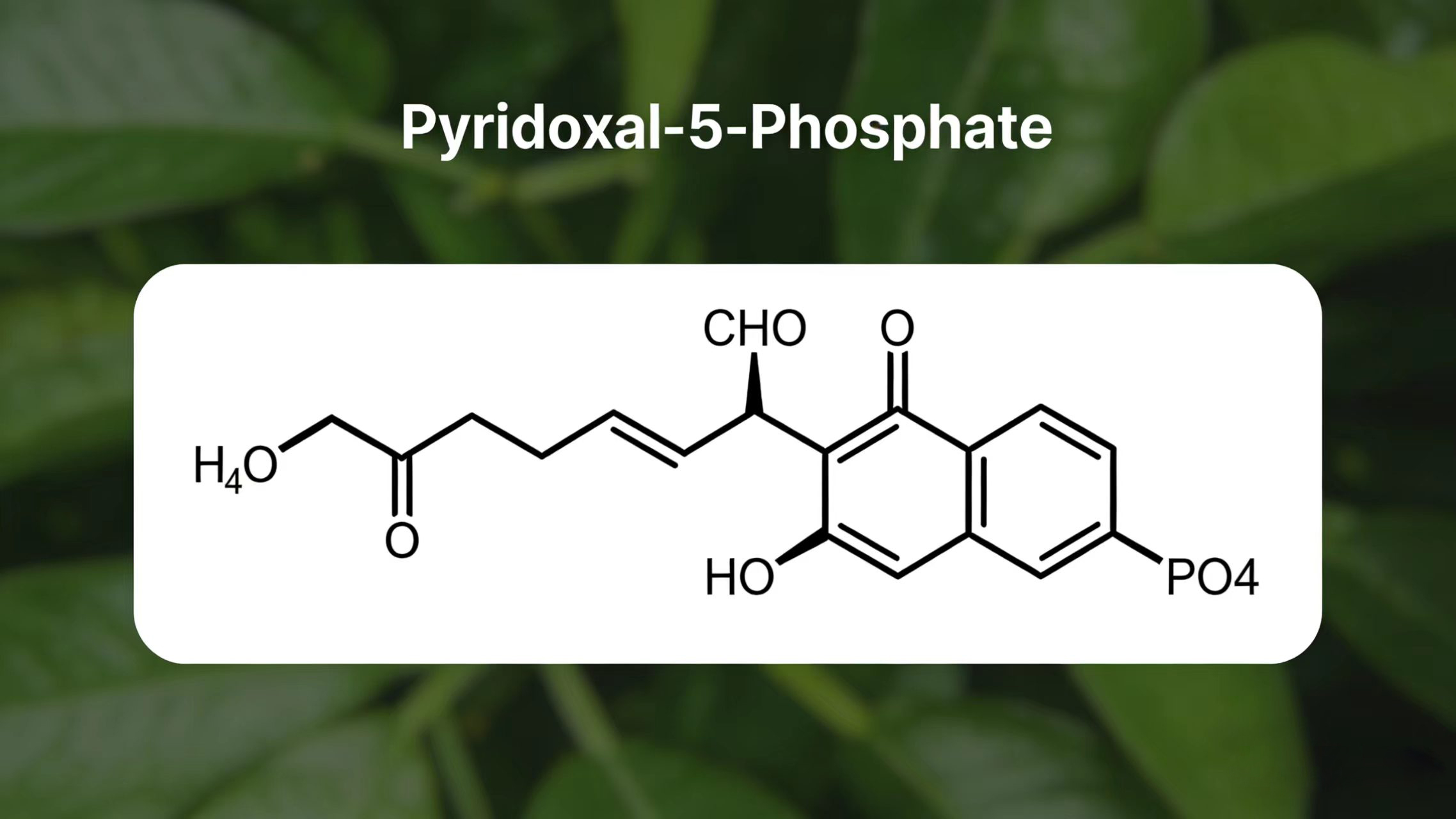
Pyridoxal-5-Phosphate (PLP) is the biologically active coenzyme form of vitamin B₆ and plays an indispensable role in human metabolism. Below is a professional, function-oriented overview of its efficacy, organized by physiological systems and biochemical mechanisms.
1. Core Biochemical Function
Pyridoxal-5-Phosphate acts as a coenzyme for more than 140 enzymatic reactions, primarily involving amino acid metabolism.
Key Enzymatic Roles
- Transamination (amino acid ↔ keto acid conversion)
- Decarboxylation (neurotransmitter synthesis)
- Racemization
- β- and γ-elimination reactions
These reactions are fundamental to protein utilization, nitrogen balance, and cellular homeostasis.
2. Amino Acid & Protein Metabolism
Primary efficacy
- Facilitates synthesis and degradation of amino acids
- Supports production of non-essential amino acids
- Enables efficient protein digestion and utilization
- Maintains nitrogen equilibrium, especially in high-protein diets
Clinical relevance: Essential for growth, tissue repair, and muscle maintenance.
3. Neurotransmitter Synthesis & Nervous System Support
Pyridoxal-5-Phosphate is indispensable for central and peripheral nervous system function.
Neurotransmitters Dependent on Pyridoxal-5-Phosphate
- Serotonin (from tryptophan)
- Dopamine & norepinephrine (from L-DOPA)
- GABA (from glutamate)
- Histamine
Functional Outcomes
- Mood stabilization
- Cognitive performance
- Stress response modulation
- Sleep regulation
Deficiency link: Irritability, depression, confusion, neuropathy.
4. Energy Metabolism
Pyridoxal-5-Phosphate participates in glycogenolysis by acting as a cofactor for glycogen phosphorylase.
Benefits
- Enhances glucose release from glycogen
- Supports muscle contraction and endurance
- Maintains blood glucose stability during fasting or exercise
5. Hematopoiesis (Red Blood Cell Formation)
Pyridoxal-5-Phosphate is required for heme biosynthesis, the iron-containing component of hemoglobin.
Efficacy
- Promotes red blood cell maturation
- Improves oxygen transport capacity
- Helps prevent sideroblastic and microcytic anemia
6. Homocysteine Metabolism & Cardiovascular Health
Pyridoxal-5-Phosphate functions in the transsulfuration pathway, converting homocysteine to cysteine.
Cardiovascular Benefits
- Reduces elevated homocysteine levels
- Supports endothelial function
- Lowers risk of vascular inflammation
Synergistic nutrients: Folate (B₉) and cobalamin (B₁₂)
7. Immune System Regulation
Pyridoxal-5-Phosphate supports both innate and adaptive immunity.
Functions
- Enhances lymphocyte proliferation
- Supports antibody synthesis
- Modulates cytokine balance
Deficiency effect: Reduced immune responsiveness.
8. Hormonal & Metabolic Regulation
Pyridoxal-5-Phosphate influences steroid hormone action and lipid metabolism.
Functions
- Modulates estrogen and glucocorticoid receptor activity
- Supports synthesis of niacin (vitamin B₃) from tryptophan
- Contributes to fatty acid metabolism
9. Antioxidant & Anti-Inflammatory Effects
Although not a direct antioxidant, Pyridoxal-5-Phosphate :
- Reduces oxidative stress via homocysteine control
- Supports glutathione synthesis (indirectly)
- Modulates inflammatory pathways
10. Advantages of PLP vs. Other Vitamin B₆ Forms
| Aspect | Pyridoxal-5-Phosphate |
| Bioactivity | Directly active |
| Liver conversion | Not required |
| Absorption | Efficient |
| Suitable for liver enzyme deficiencies | Yes |
Pyridoxal-5-Phosphate is especially beneficial for individuals with impaired pyridoxine kinase activity.
Summary of Efficacy & Functions
✔ Essential coenzyme in amino acid metabolism
✔ Critical for neurotransmitter synthesis
✔ Supports energy production and glycogen breakdown
✔ Promotes red blood cell formation
✔ Regulates homocysteine and cardiovascular health
✔ Enhances immune and nervous system function
If you would like, I can also provide:
- Clinical applications and therapeutic uses
- Comparison with pyridoxine HCl
- Dosage, safety, and stability
- Use in pharmaceuticals, nutraceuticals, or cosmetics
Just tell me your focus area.
From cellsbio health technology co.,ltd
评论
发表评论