Pro-Xylane (INCI: Hydroxypropyl Tetrahydropyrantriol) is a cosmetic active ingredient originally developed by L’Oréal via green chemistry from xylose, a sugar found abundantly in beech wood. Chemically it’s a C-glycoside derivative designed for skin conditioning and anti-aging applications.
- Developed in early 2000s and introduced in Lancôme products in 2006.
- Can appear as a high-purity powder or liquid in formulations.
Mechanism of Action (How It Works)
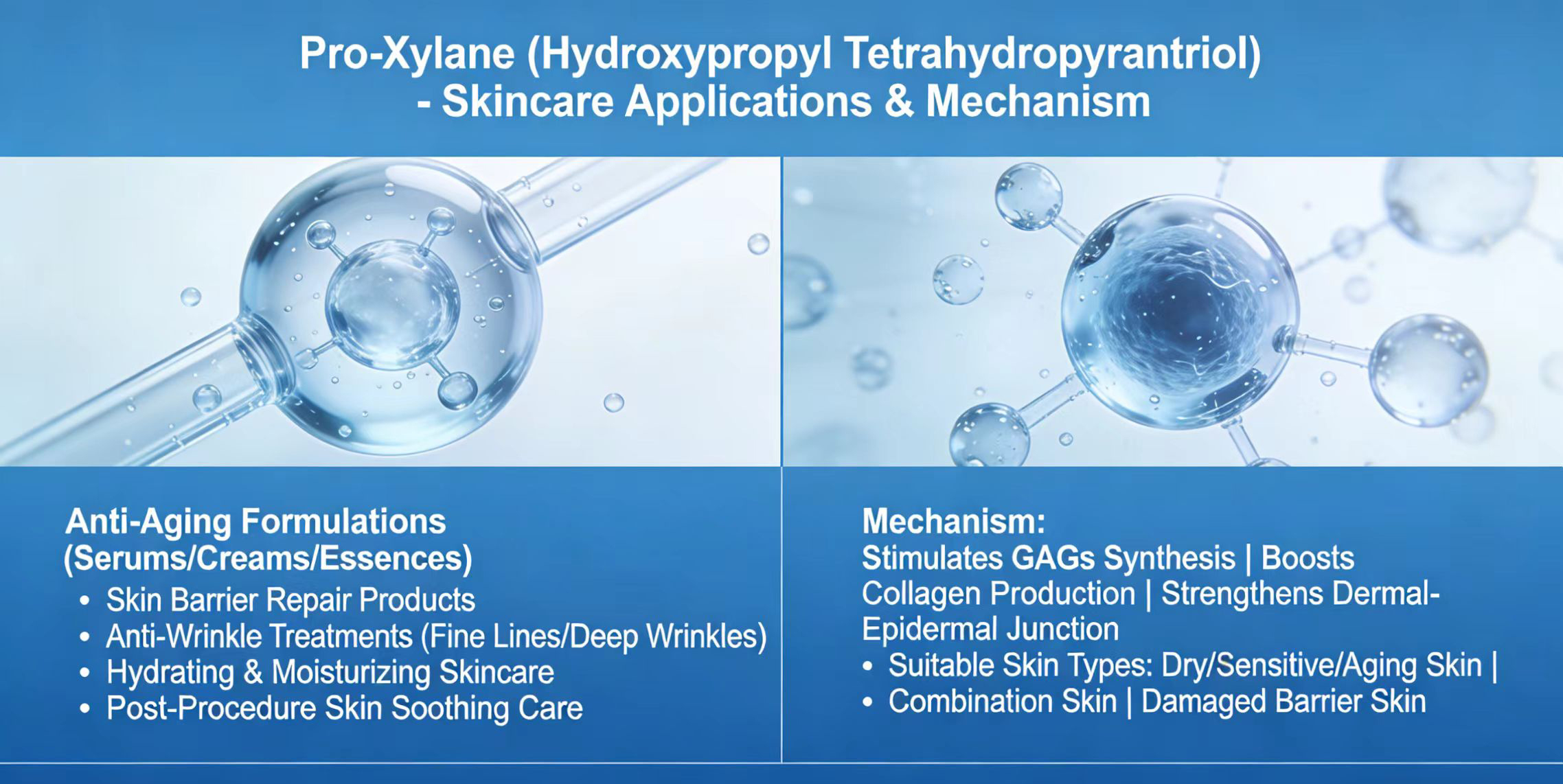
Pro-Xylane is primary biological actions are focused on the extracellular matrix (ECM) of the skin — a network that provides structure, hydration, and support to cells:
Core Mechanisms
1. Stimulates Glycosaminoglycan (GAG) Synthesis
- Increases production of GAGs such as hyaluronic acid and proteoglycans, essential for moisture retention and dermal structure.
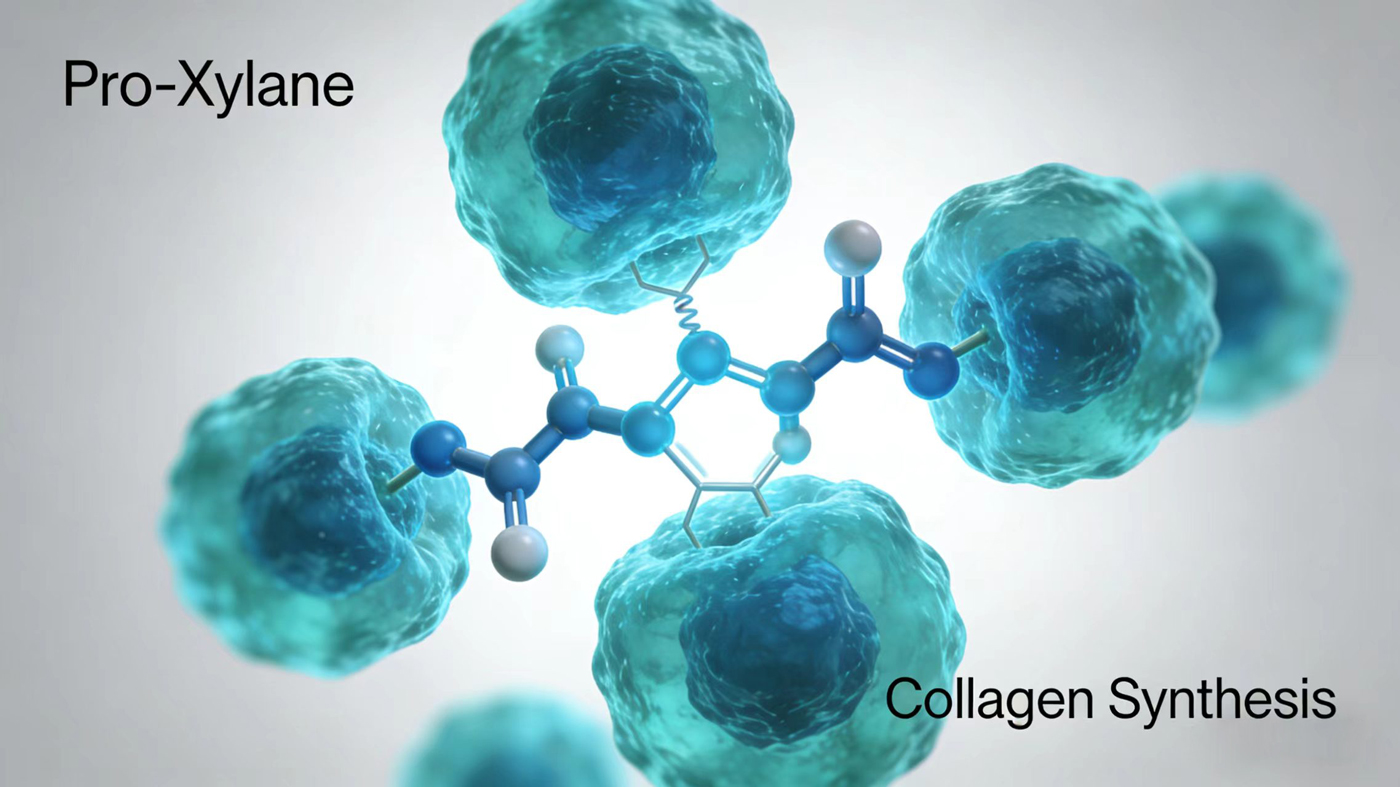
2. Promotes Collagen Production
- Enhances synthesis of structural proteins (e.g., collagens I, IV, VII) crucial for firmness and elasticity.
3. Reinforces the Dermal-Epidermal Junction (DEJ)
- Helps strengthen the connection between deeper and surface skin layers, improving resilience and biomechanical integrity.
4. Hydration & Barrier Enhancement
- GAGs bind water, improving skin moisture, reducing dryness and fine lines.
5. Lower Irritation Profile
- Compared with strong actives like high-dose retinoids, Pro-Xylane is generally milder and suitable for sensitive skin.
Efficacy: Evidence from Clinical Studies
Although not as extensively researched as some classic actives (e.g., retinoids), several clinical investigations support Pro-Xylane’s anti-aging effects:
Randomized Clinical Trials
1. Menopausal Women Study (Acta Dermato-Venereologica)
- A multicenter, evaluator-blinded, randomized study tested a Pro-Xylane-containing skin care complex versus control moisturizer over 60 days, showing statistically significant anti-aging benefits (improved elasticity & subjective assessments).
2. Split-Face / Combination Formulations
- Other trial designs — such as combining extracts + Pro-Xylane — suggested improved appearance and satisfaction versus placebo; however these are brand-specific and harder to interpret independently.
3. Longer Term Use Effects
- Use over 3–6 months showed improvements in elasticity, wrinkle appearance, and skin texture relative to placebo in clinical settings.
In Vitro Research
Studies on reconstructed skin models demonstrate increased GAG and proteoglycan production with Pro-Xylane exposure, consistent with improved hydration and matrix density.
Note: Some scientific literature mentions Pro-Xylane mainly as a comparator ingredient rather than the main focus, and many trials involve proprietary formulations rather than pure Pro-Xylane.
Reported Benefits
Skin Aging & Structural Effects
- Improved Skin Firmness & Elasticity — by bolstering collagen and GAG content.
- Reduction in Fine Lines & Wrinkles — especially in consistent usage over weeks.
- Hydration & Moisture Retention — enhanced barrier and water-binding.
- Supportive for Sensitive Skin — gentler than some potent actives.
Additional Claimed Effects
- Improved Complexion & Skin Tone — via enhanced hydration and cell turnover.
- Complementary Post-Procedure Care — discussed in aesthetic medicine contexts.
Potential Risks & Limitations
Although generally considered safe, some reports note:
- Irritation / Allergic Reactions – possible in sensitive individuals.
- Dryness or Surface Sensitivity – with excessive use or high concentration.
- Variable Efficacy – results differ by formulation concentration, vehicle and adjunct actives.
Formulation & Usage Considerations
- Commonly formulated at ~0.2–3% in skincare — often in serums and creams.
- Works well alongside hyaluronic acid, niacinamide, antioxidants — boosting hydration + anti-aging synergy.
- Best used consistently over weeks to months for noticeable changes.
Market & Industry Adoption
- Pro-Xylane is widely used in anti-aging and hydration products from mass to luxury ranges (e.g., L’Oréal, Lancome, Helena Rubinstein).
- Global market forecasts project growth driven by demand for “green”, plant-derived and science-backed actives.
Summary: Evidence-Based Takeaways
| Aspect | Status |
| Mechanism | Stimulates GAG & collagen synthesis; supports ECM structure. |
| Clinical Evidence | Moderate — supportive but often proprietary and mixed by formulation. |
| Safety Profile | Generally mild, though monitoring for irritation advised. |
| Best Use | Anti-aging, hydration, sensitive skin routines. |
| Compared to other actives | Gentler than strong retinoids, complementary with hydrating agents. |
If you’d like, I can also provide a comparative analysis of Pro-Xylane versus other anti-aging ingredients (like retinol, peptides, or niacinamide) with pros/cons and recommended formulations.
评论
发表评论