Matrixyl 3000 (often used interchangeably with Matrixyl® 3000 in skincare research and products), covering what it is, how it works, clinical evidence, benefits, formulation considerations, safety, and limitations.
What Is Matrixyl 3000?
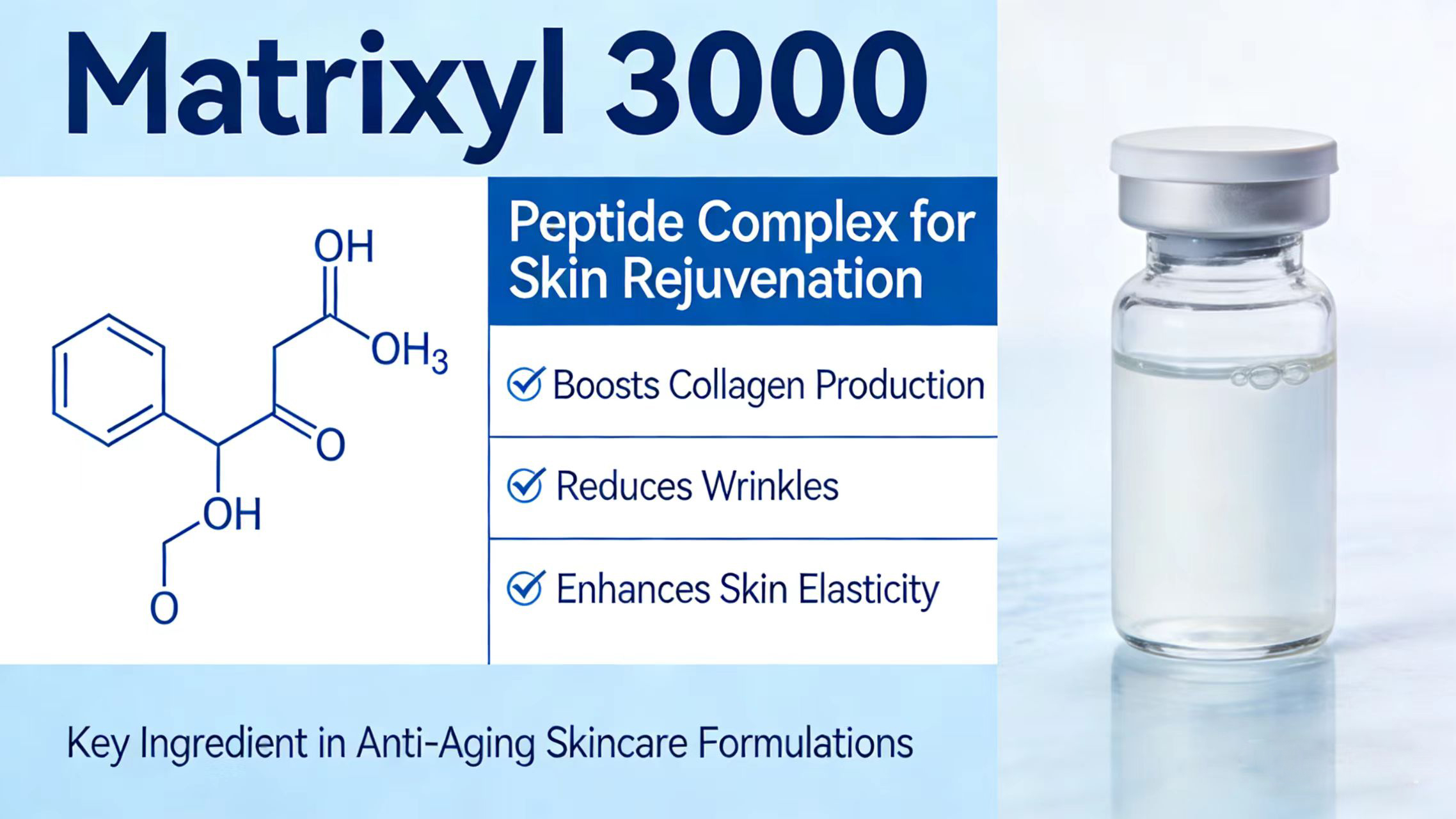
Matrixyl 3000 (more commonly known via the trademarked Matrixyl® 3000) is a synthetic peptide complex used in anti‑aging skincare. It typically includes two matrikine peptides:
- Palmitoyl Tripeptide‑1 — stimulates collagen production
- Palmitoyl Tetrapeptide‑7 — reduces inflammation and protects existing collagen
Together they belong to a class called signal peptides, which mimic fragments of degraded collagen and signal skin cells to start repair processes.
Mechanism of Action
Matrixyl peptides work by “signaling” fibroblasts — the skin cells responsible for producing collagen, elastin, and other structural proteins:
1. Mimics Collagen Breakdown Products
– The peptides resemble natural fragments that arise when collagen breaks down. Cells interpret this as a need for repair, triggering increased production of matrix proteins.
2. Stimulates Extracellular Matrix (ECM) Synthesis
– Collagen types I, III, IV
– Elastin
– Glycosaminoglycans (including hyaluronic acid)
increases skin’s structural integrity and hydration.
3. Anti‑Inflammatory Action
– Palmitoyl Tetrapeptide‑7 helps reduce pro‑inflammatory cytokines that accelerate aging processes.
Overall, this approach focuses on repairing the structural framework of skin cells rather than aggressively resurfacing them (as some vitamins/retinoids do).
Clinical Evidence & Research
Collagen and Structural Proteins
- Studies show Matrixyl 3000 can increase collagen I synthesis significantly and boost other matrix components like hyaluronic acid and collagen III.
- Some clinical data report wrinkle depth decreases, elasticity improvements, and surface smoothing after consistent use (typically 8–12 weeks).
Wrinkle Reduction
- In vivo studies indicate up to ~45% reduction in wrinkle depth over months of use.
Hydration & Elasticity
- Peptide formulations with Matrixyl show measurable increases in skin elasticity (~13%) and hydration (~19%).
Safety & Tolerability
- Patch testing across various skin types shows high tolerability (>95%) with low irritation rates.
- Long‑term safety studies suggest low risk of irritation compared to stronger actives like retinoids (e.g., lower irritation incidence).
Benefits Supported by Research
✅ 1. Stimulates Collagen & Matrix Proteins
Matrixyl increases the production of structural proteins that decline with age, helping firm skin and reduce visible lines.
2. Improves Wrinkle Depth & Texture
Clinical data show improvement in fine lines and smoothing of skin surface with regular topical application.
✅ 3. Enhances Hydration & Barrier Function
By boosting glycosaminoglycans (e.g., hyaluronic acid), Matrixyl‑based serums help retention of moisture and skin plumpness.
✅ 4. Anti‑Inflammatory Effects
Reduces inflammatory signaling associated with aging and environmental stress.
✅ 5. Gentle & Broadly Tolerated
Suitable for sensitive skin or those who find retinoids too irritating.
Formulation & Use Guidelines
Effective Concentrations
- Research and formulations typically use Matrixyl complexes in 0.1–3% ranges.
- Marketing claims (e.g., “10% peptide”) may not reflect actual active concentration.
Delivery & Stability
- Peptides are large molecules: vehicle formulation matters (e.g., pH, enhancers) for deeper penetration.
Limitations & Considerations
Slow Results
- Unlike exfoliants or retinoids that show quick surface effects, Matrixyl’s structural benefits typically appear over weeks to months.
Not a Therapeutic Drug
- Matrixyl peptides are cosmetic ingredients, not FDA‑approved drugs. Their function is supportive rather than curative.
Product Variation
- Efficacy depends on formulation quality. Cheap products may contain low peptide levels or poorly‑designed vehicles, reducing effectiveness.
Summary
Matrixyl 3000 is a well‑researched peptide complex with a clear biological rationale: it signals skin cells to ramp up production of collagen, elastin, and other matrix proteins that diminish with age. It’s widely supported by clinical data showing improvements in wrinkles, elasticity, and hydration with consistent use. Its gentle profile makes it suitable for many skin types, including those sensitive to stronger actives.
From cellsbio health technology co.,ltd
评论
发表评论