Matrixyl 3000 is a trademarked peptide complex widely used in anti-aging skincare. It isn’t a single pure chemical compound, but a blend of two synthetic peptides designed to signal skin cells and promote collagen and extracellular matrix production.
Component Peptides
Matrixyl 3000 is composed of two palmitoylated peptides:
1. Palmitoyl Tripeptide-1
- A peptide with three amino acids (often derived from a sequence including glycine–histidine–lysine, Pal-GHK) linked to palmitic acid (a C16 fatty acid).
- Palmitoylation increases lipid solubility and helps the peptide penetrate the skin.
2. Palmitoyl Tetrapeptide-7
- A four–amino-acid peptide (Pal-GQPR) also linked to palmitic acid.
- Works synergistically with the tri-peptide to reduce inflammatory signaling and support skin repair.
These two peptides together form the Matrixyl 3000 complex.
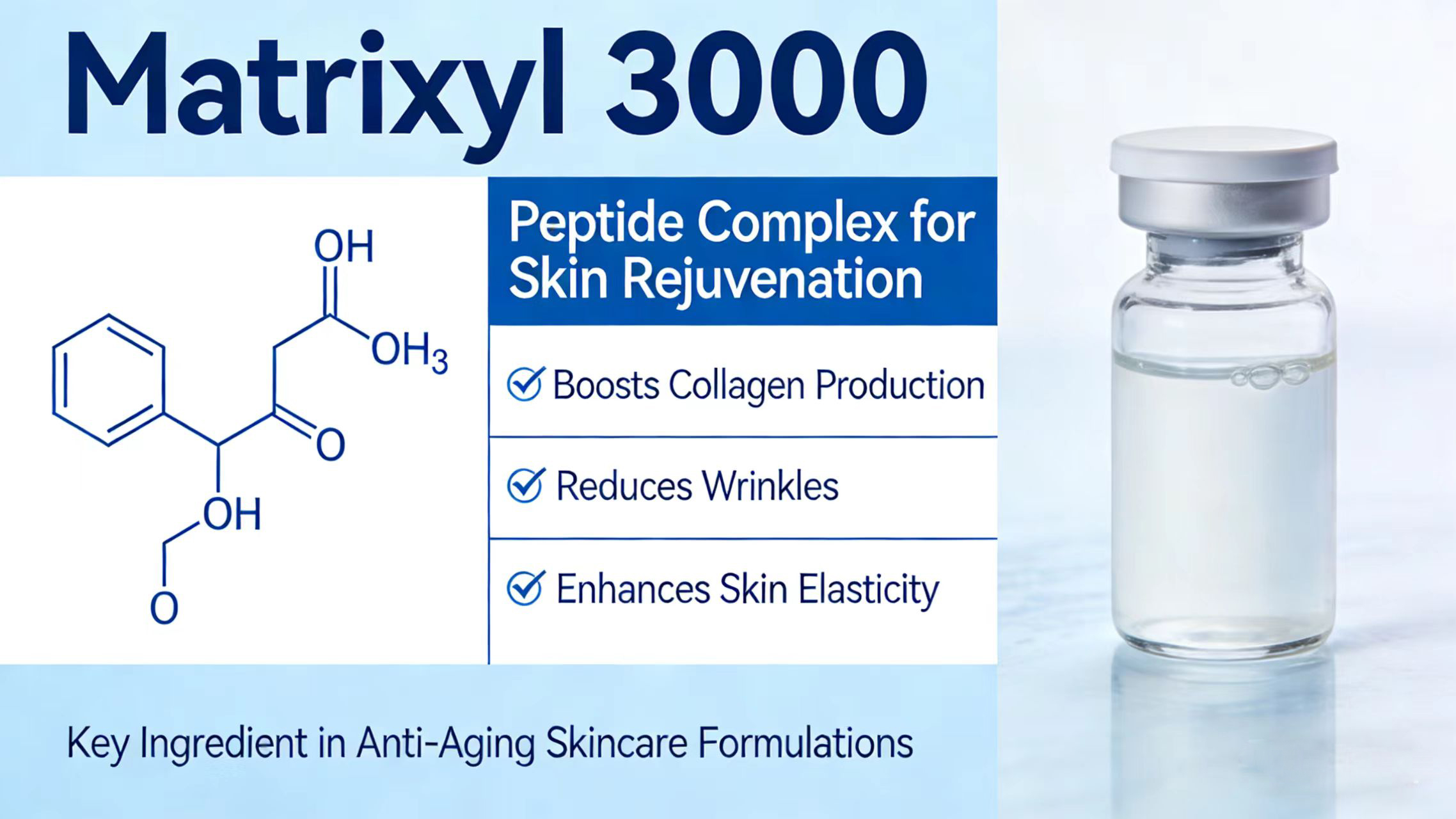
Chemical Structure of Matrixyl 3000
Matrixyl 3000 doesn’t have a single molecular formula because it’s a mixture of two distinct peptides:
1. Palmitoyl Tripeptide-1:
- A peptide chain of three amino acids covalently bonded to palmitic acid
- Example generalized formula (for one component): CnHmNoOp depending on exact sequence and peptide length
- Reported CAS for palmitoyl-Gly-His-Lys type peptides: 147732-56-7 for palmitoyl tripeptide-1.
2. Palmitoyl Tetrapeptide-7:
- Four amino acids linked to palmitic acid
- Reported CAS for palmitoyl tetrapeptide-7: 221227-05-0.
In commercial raw powder form, some sources list a separate CAS for combined peptide complexes like Matrixyl; e.g., 77727-17-4 has been referenced in synthetic peptide supply listings (though individual component CAS are the true identifiers).
Structure summary:
- N-terminal palmitoyl (C16 fatty acid) tail → peptide sequence → C-terminal free amino group (or amide depending on synthesis).
- The palmitoyl chain improves skin penetration and lipophilicity relative to unmodified peptides.
Physical Properties of Matrixyl 3000
Matrixyl 3000 in raw peptide form (powder) has these general characteristics:
| Property | Typical Value / Description |
| Appearance (raw) | White to off-white fine powder (lyophilized) |
| Solubility | Soluble in water (for formulation into serums/aqueous solutions) |
| Stability | Stable as lyophilized powder; peptides can degrade with heat or extreme pH |
| Melting Point (reported) | ~224–227 °C (for powder complex preparation) |
| Physical Form in Cosmetic Formulations | Clear/pale liquid or gel when delivered in glycerin/water blends |
| pH Range in Formulations | Compatible typically around pH 4–7 |
In finished skincare products, Matrixyl 3000 is typically supplied as a liquid or gel suspension in water, glycerin, and humectants rather than as a standalone solid.
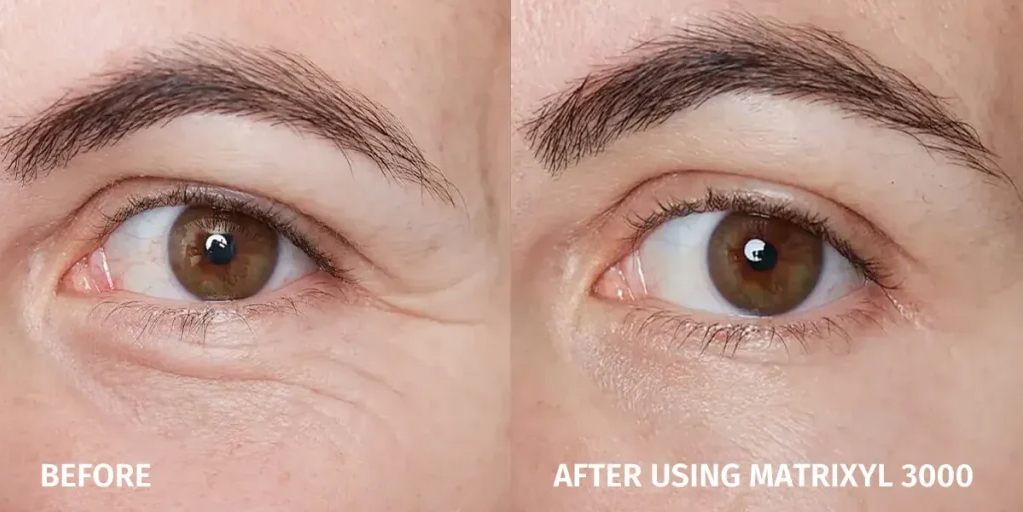
Functional Notes
- Palmitoylation: The fatty acid (palmitic acid) attached to each peptide increases their lipophilicity, helping them penetrate the stratum corneum more effectively than unmodified peptides.
- Mechanism: The peptides mimic matrikines (matrix fragments) that signal skin cells to produce collagen and other extracellular matrix components.
Summary
- Matrixyl 3000 = blended peptide complex (palmitoyl tripeptide-1 + palmitoyl tetrapeptide-7).
- Chemical nature: synthetic short peptides with palmitic acid modifications to bolster skin delivery.
- Physical form: white to off-white powder (raw), water-soluble for cosmetic use.
If you’d like, I can also provide structural diagrams or amino-acid sequences for the peptide components!
From cellsbio health technology co.,ltd
评论
发表评论