Saccharide Isomerate is a naturally derived carbohydrate-based ingredient widely used in skincare formulations. It is often called a “moisture magnet” because of its strong ability to bind water to the skin. It is mainly used as a humectant, skin-conditioning agent, and barrier-supporting ingredient in moisturizers, serums, essences, and sensitive-skin products.
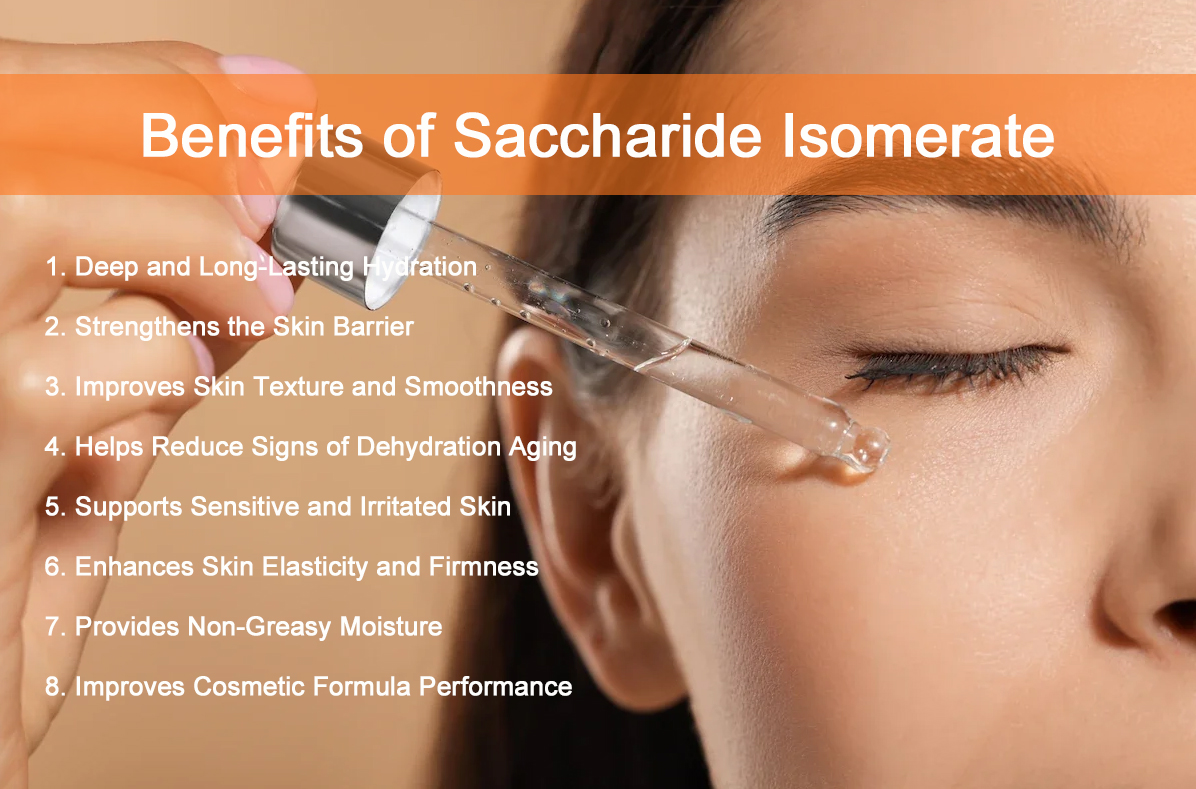
1. Deep and Long-Lasting Hydration
Primary benefit: powerful moisturizing effect
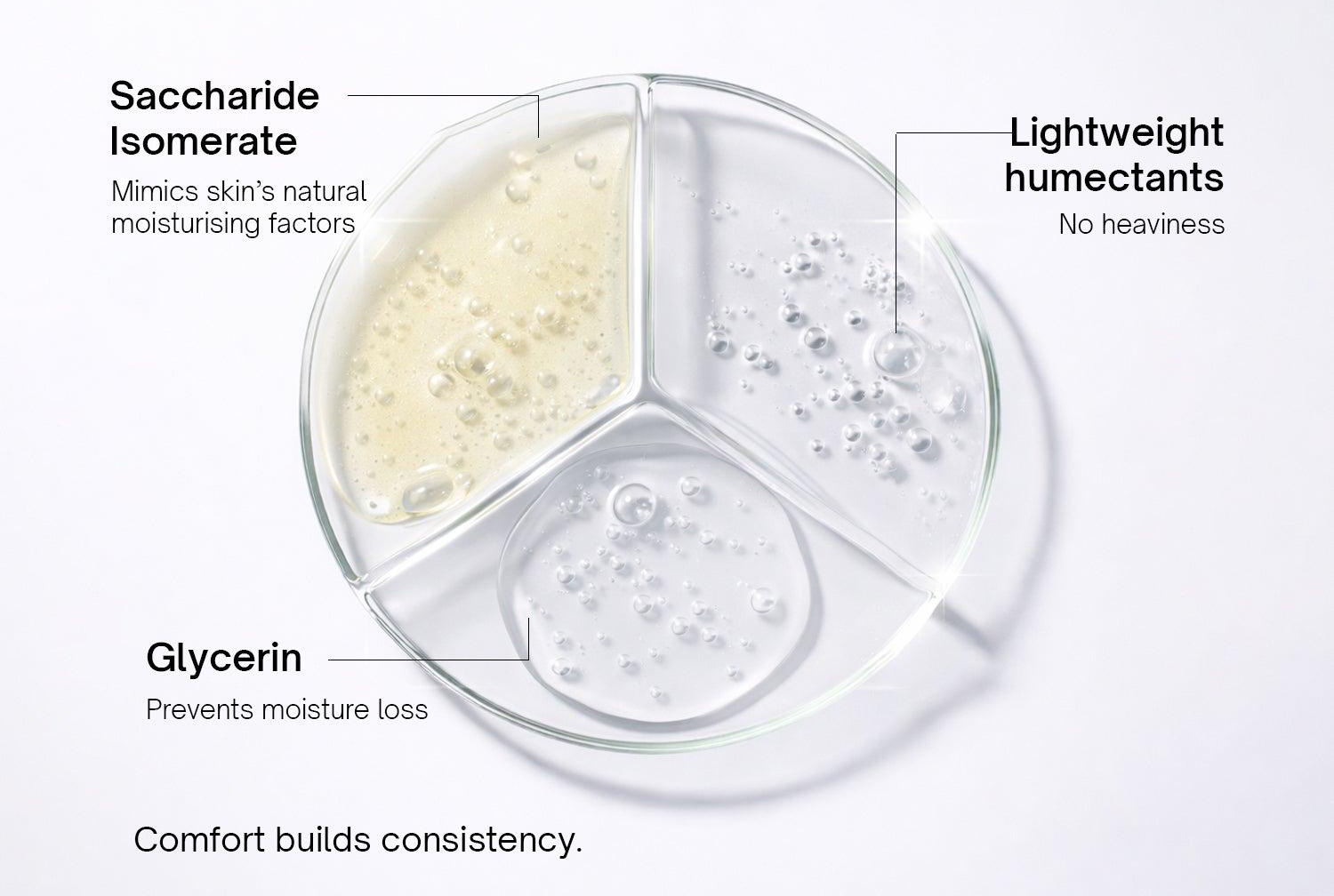
- Saccharide Isomerate has a molecular structure similar to components of the skin’s Natural Moisturizing Factor (NMF).
- It binds strongly to keratin proteins in the stratum corneum (outer skin layer), helping maintain water content.
- Unlike many temporary moisturizers that remain mainly on the surface, Saccharide Isomerate can attach to the skin and provide hydration for extended periods.
Skin benefits:
- Reduces dryness and tightness
- Improves skin softness and smoothness
- Helps maintain a plump, hydrated appearance
- Supports comfortable skin feel after cleansing or exfoliation
2. Strengthens the Skin Barrier
A healthy skin barrier prevents excessive water loss and protects against external stressors.
Saccharide Isomerate helps:
- Improve stratum corneum hydration
- Reduce transepidermal water loss (TEWL)
- Support proper organization of skin lipids and proteins
- Improve barrier recovery in dry or compromised skin
Useful for:
- Dry skin
- Sensitive skin
- Over-exfoliated skin
- Skin exposed to harsh climates
3. Improves Skin Texture and Smoothness
By increasing water retention in the outer skin layers, Saccharide Isomerate can:
- Plump dehydrated skin
- Reduce the appearance of fine dehydration lines
- Make rough skin feel smoother
- Improve elasticity and suppleness
It does not directly stimulate collagen production, but hydrated skin often appears younger and healthier.
4. Helps Reduce Signs of Dehydration Aging
Dehydration can make wrinkles and fine lines appear more prominent.
Saccharide Isomerate helps by:
- Increasing epidermal moisture levels
- Improving skin surface flexibility
- Making fine lines caused by dryness less visible
Anti-aging role:
Mainly a hydration-based anti-aging ingredient
Works well alongside collagen-supporting ingredients such as:
- Retinoids
- Peptides
- Vitamin C derivatives
- Growth factors
5. Supports Sensitive and Irritated Skin
Saccharide Isomerate is generally considered gentle and suitable for sensitive skin.
Potential benefits:
- Reduces discomfort caused by dryness
- Improves skin resilience
- Helps maintain a balanced moisture environment
- Provides soothing hydration without heavy occlusion
It is commonly included in formulations designed for:
- Sensitive skin
- Barrier repair products
- Post-procedure skincare
6. Enhances Skin Elasticity and Firmness
Adequate hydration affects the mechanical properties of skin.
Saccharide Isomerate may help:
- Increase skin flexibility
- Reduce roughness
- Improve the feeling of firmness
- Create a smoother skin surface
The effect is mainly due to improved hydration rather than direct remodeling of collagen or elastin.
7. Provides Non-Greasy Moisture
Compared with heavy oils or occlusive ingredients:
- Lightweight texture
- Water-compatible
- Suitable for oily and combination skin
- Provides hydration without a greasy residue
It is often combined with:
- Hyaluronic acid
- Glycerin
- Polyglutamic acid
- Beta-glucan
8. Improves Cosmetic Formula Performance
From a formulation perspective, Saccharide Isomerate offers:
| Function | Benefit |
| Humectant | Attracts and retains water |
| Skin conditioner | Improves softness and smoothness |
| Barrier support | Helps reduce moisture loss |
| Texture enhancer | Creates a silky skin feel |
| Compatibility | Works well with many active ingredients |
Saccharide Isomerate Compared With Common Humectants
| Ingredient | Main Advantage | Limitation |
| Saccharide Isomerate | Long-lasting binding to skin keratin | Usually more expensive |
| Hyaluronic Acid | Strong water attraction, plumping | Large molecules may mainly remain on surface |
| Glycerin | Excellent hydration, affordable | Can feel sticky at high levels |
| Polyglutamic Acid | Strong moisturizing film | Less established long-term skin binding |
| Urea | NMF component, excellent for very dry skin | Higher levels may irritate sensitive skin |
Best Skincare Applications
Saccharide Isomerate is commonly used in:
- Hydrating serums
- Facial moisturizers
- Barrier repair creams
- Anti-aging products
- Sensitive skin formulations
- After-sun products
- Eye creams
- Cleansers to reduce post-wash dryness
Typical Usage Level in Cosmetics
Common concentration range:
- 0.5–5% in skincare formulations
- Around 1–3% is frequently used for hydration-focused products
(Actual levels depend on formula design and supplier recommendations.)
Potential Limitations
Although generally safe, Saccharide Isomerate:
- Does not exfoliate or remove pigmentation
- Does not directly increase collagen synthesis
- Does not replace barrier lipids such as ceramides
- May need combination with occlusives (ceramides, oils, petrolatum) for severely damaged barriers
Key Takeaway
Saccharide Isomerate is a high-performance moisturizing ingredient that mimics the skin’s natural hydration system. Its main advantages are long-lasting hydration, improved skin barrier function, smoother texture, and better comfort for dry or sensitive skin. It is especially valuable in modern skincare formulas focused on hydration, barrier repair, and healthy aging.
From cellsbio health technology co.,ltd
评论
发表评论