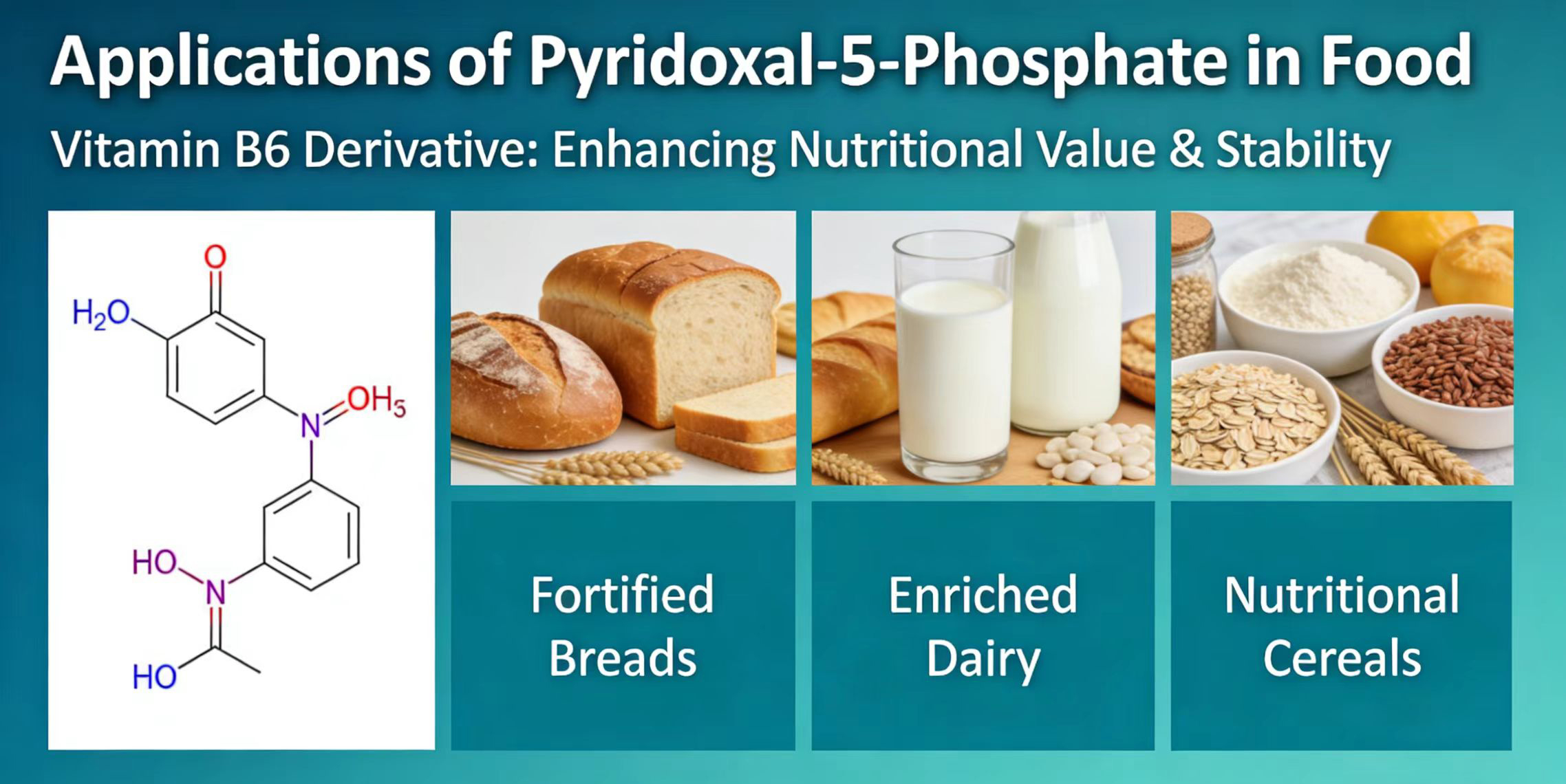
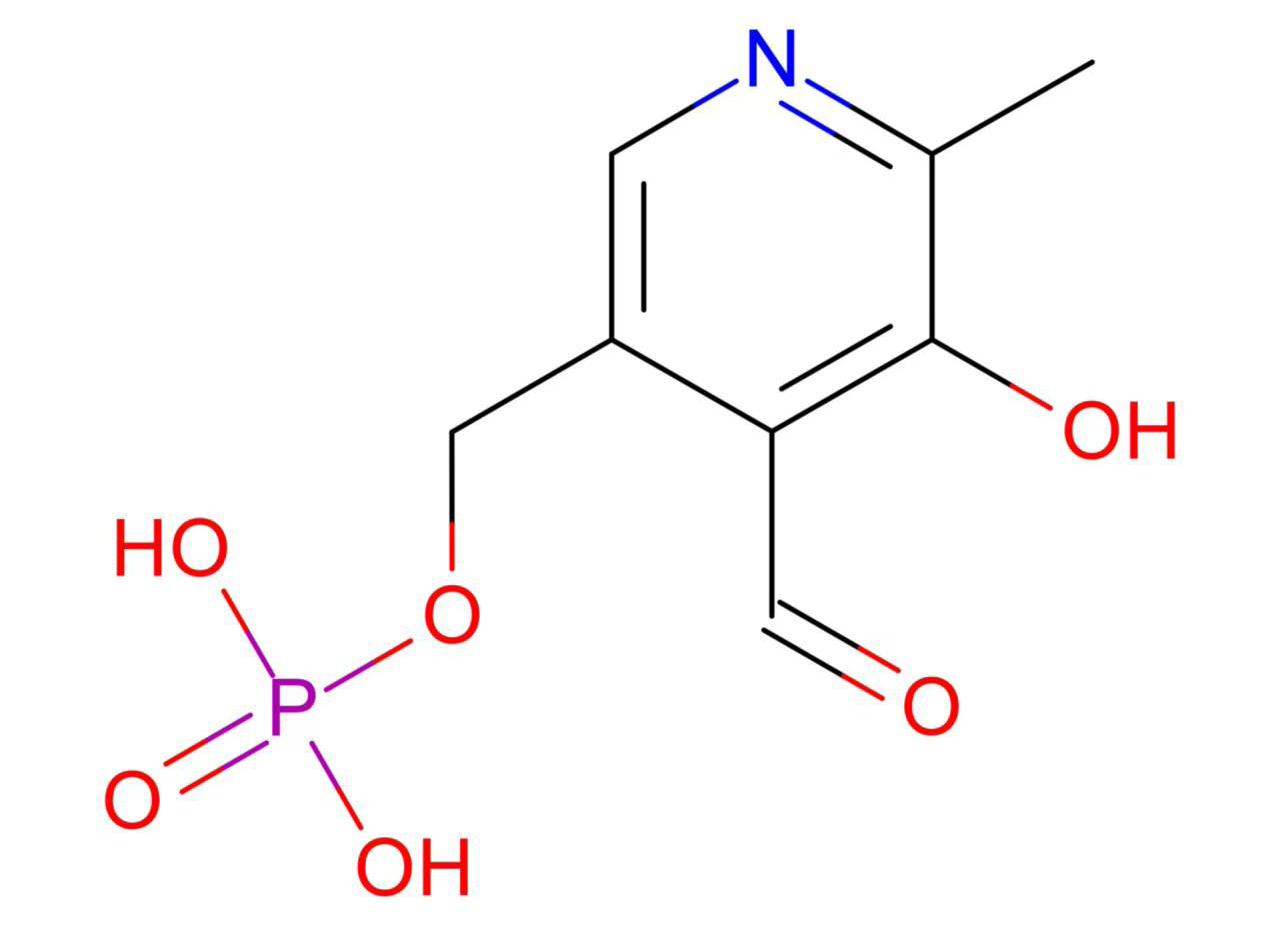
Pyridoxal-5-Phosphate (PLP), the biologically active form of vitamin B₆, does have real—but fairly specialized—applications in foods, mostly tied to nutrition fortification, functional foods, and research, rather than mass-market processing. Here’s a clean, food-science–oriented breakdown.
1. Nutritional Fortification
Functional role
Pyridoxal-5-Phosphate serves directly as active vitamin B₆, bypassing the need for enzymatic conversion from pyridoxine or pyridoxamine.
Food applications
- Medical foods (for patients with impaired B₆ metabolism)
- Infant formulas (limited, tightly regulated use)
- Foods for special medical purposes (FSMP)
- Elderly nutrition products
Why Pyridoxal-5-Phosphate instead of pyridoxine?
- Bioactive form → faster utilization
- Useful when hepatic phosphorylation is compromised
- Avoids dependency on pyridoxal kinase
Because Pyridoxal-5-Phosphate is less stable and more expensive, pyridoxine HCl is still preferred for mainstream fortification.
2. Functional Foods & Dietary Supplements (Food Category)
Pyridoxal-5-Phosphate is increasingly used in high-end functional food formulations, especially in Asia.
Typical products
- Nutritional beverages
- Protein powders & meal replacements
- Energy and metabolism support foods
- Cognitive and mood-support functional foods
Functional claims (structure/function)
- Amino acid metabolism
- Neurotransmitter synthesis (serotonin, dopamine, GABA)
- Homocysteine metabolism (via transsulfuration)
3. Fermented Foods & Food Biotechnology (Indirect Application)
Pyridoxal-5-Phosphate itself is not added as a fermentative agent, but it plays a critical biochemical role.
Examples
Lactic acid bacteria and yeast require Pyridoxal-5-Phosphate-dependent enzymes for:
- Amino acid interconversion
- Flavor compound biosynthesis
- Nitrogen metabolism
Applications
- Used as a growth supplement in culture media
- Improves yield or metabolic efficiency in controlled fermentation systems
4. Food Processing & Quality Control (Analytical Use)
Pyridoxal-5-Phosphate is used in food science laboratories, not as an ingredient.
Uses
- Enzyme cofactor in assays for amino acids
- Studying Maillard reaction mechanisms
- Model systems for protein–vitamin interactions
5. Regulatory & Practical Limitations
Stability challenges
Sensitive to:
- Heat
- Light
- pH extremes
Can interact with proteins and sugars
Regulatory status
- Allowed as a vitamin B₆ source in many regions
- Use levels are strictly controlled
- Less common than pyridoxine in general foods
6. Comparison with Other Vitamin B₆ Forms in Foods
| Aspect | Pyridoxal-5-Phosphate | Pyridoxine HCl |
| Bioactivity | Direct | Requires conversion |
| Stability | Low | High |
| Cost | High | Low |
| Typical foods | Medical/functional | Staple fortified foods |
| Processing tolerance | Poor | Excellent |
Key Takeaway
Pyridoxal-5-Phosphate is best suited for specialized food applications, such as:
- Medical nutrition
- High-value functional foods
- Research and fermentation systems
For large-scale food fortification, pyridoxine remains the industry standard—but Pyridoxal-5-Phosphate shines where bioavailability and metabolic efficiency matter most.
If you want, I can also cover:
- Regulatory limits by region (EU, US, China, Korea)
- Stability optimization strategies in food matrices
- Pyridoxal-5-Phosphate vs pyridoxine selection guide for product developers.
- From cellsbio health technology co.,ltd
评论
发表评论