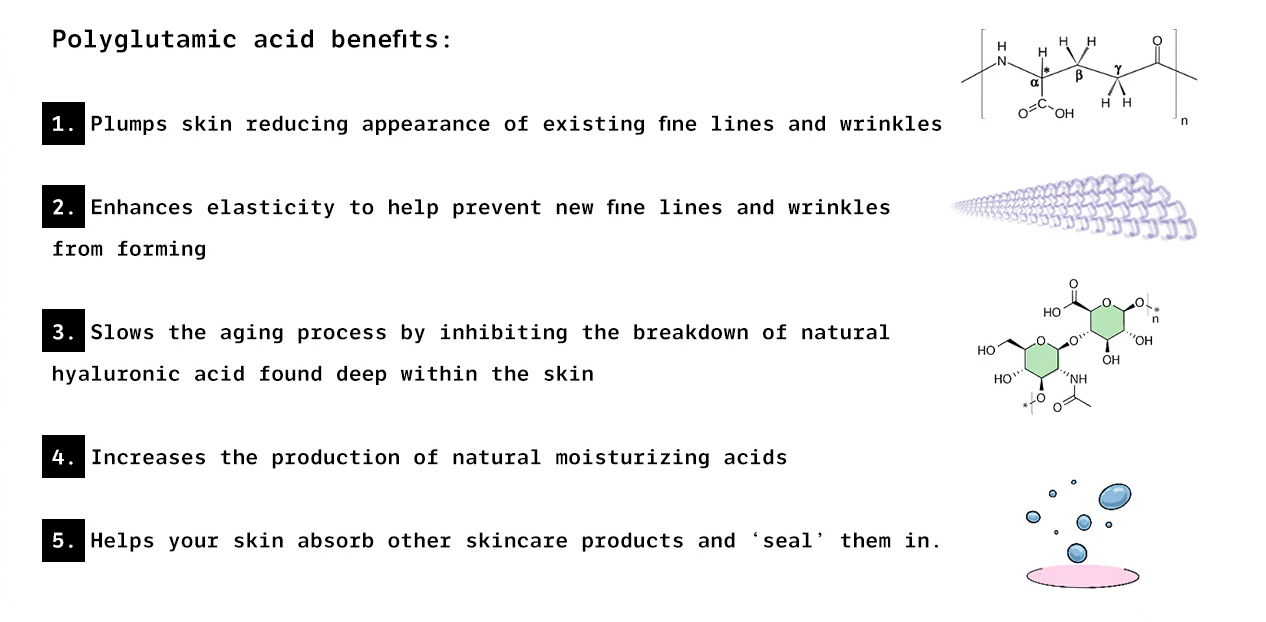
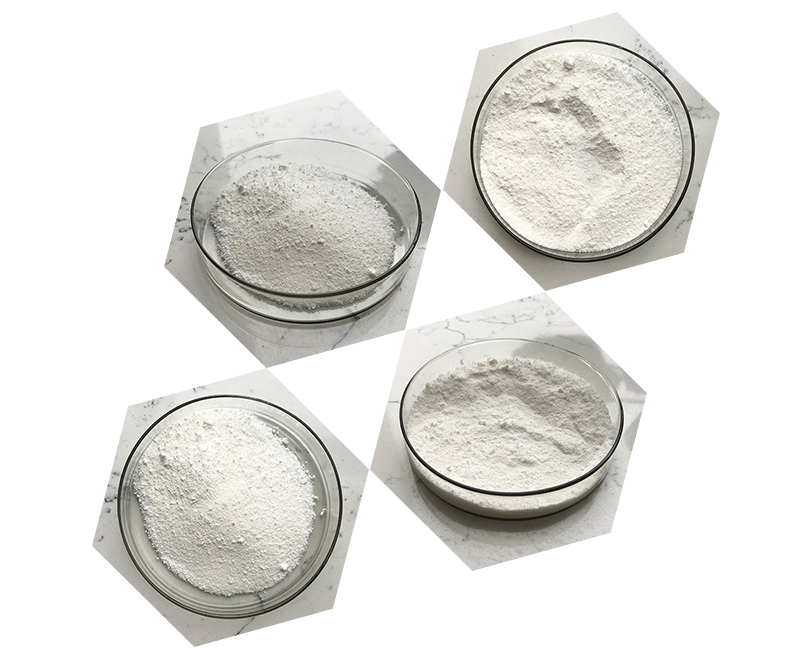
Polyglutamic acid (PGA) is a naturally occurring compound composed of glutamic acid, an amino acid that is important in various biological functions. It has gained attention in the fields of skincare and health due to its range of potential benefits:
1. Hydration:
- Moisturizing: Polyglutamic acid is known for its impressive ability to retain moisture. It can hold water molecules in the skin, making it a powerful humectant. In fact, it is believed to retain moisture up to 5,000 times its weight, providing deep hydration.
- Improved Skin Barrier: By attracting and holding water in the skin, it helps reinforce the skin barrier, leading to healthier and more hydrated skin over time.
2. Anti-aging Properties:
- Wrinkle Reduction: Polyglutamic acid helps to plump and hydrate the skin, reducing the appearance of fine lines and wrinkles. It also stimulates the production of hyaluronic acid, which is a key component for maintaining skin elasticity and firmness.
- Skin Firmness: Regular use can enhance the skin’s overall firmness and texture.
3. Skin Soothing:
- Anti-inflammatory: Polyglutamic acid has anti-inflammatory properties, making it helpful in calming irritated skin and reducing redness.
- Sensitivity Relief: It can be beneficial for sensitive skin, as it helps to maintain skin hydration without causing irritation.
4. Brightening Effect:
- Even Skin Tone: Because of its hydrating properties, Polyglutamic acid can improve skin’s radiance and help to even out skin tone. Well-hydrated skin often looks more glowing and fresh.
5. Boosts Other Skincare Ingredients:
- Enhances Effectiveness: Polyglutamic acid can work synergistically with other skincare ingredients, such as Vitamin C and peptides, helping them penetrate the skin more effectively. Its water-binding ability ensures that these ingredients stay active on the skin longer.
6. Antioxidant Properties:
- Free Radical Protection: Polyglutamic acid has antioxidant effects that can help protect the skin from damage caused by free radicals, which are a factor in aging and skin damage. This makes it an excellent choice in anti-aging skincare.
7. Gentle Exfoliation:
- Improved Skin Texture: Polyglutamic acid has been shown to help gently exfoliate the skin by promoting the natural shedding of dead skin cells. This can result in smoother, softer skin.
8. Supports Collagen Production:
- Collagen Synthesis: There is evidence suggesting that Polyglutamic acid helps in the production of collagen, a protein responsible for skin strength and elasticity. More collagen can lead to firmer and more youthful-looking skin.
9. Hair Care:
- Hair Moisturization: Polyglutamic acid can also be beneficial in hair care products. It can help moisturize the scalp and hair, making the hair softer and shinier.
- Anti-frizz: Its moisture-locking properties help control frizz, making it a popular ingredient in hair serums and treatments.
10. Gentle on the Skin:
- Non-irritating: Polyglutamic acid is considered to be non-irritating, making it suitable for most skin types, including sensitive skin.
In summary, polyglutamic acid is a versatile ingredient that offers multiple benefits, particularly for skin hydration, anti-aging, and enhancing the effects of other skincare treatments. It’s often included in moisturizing products like serums, masks, and moisturizers.
评论
发表评论