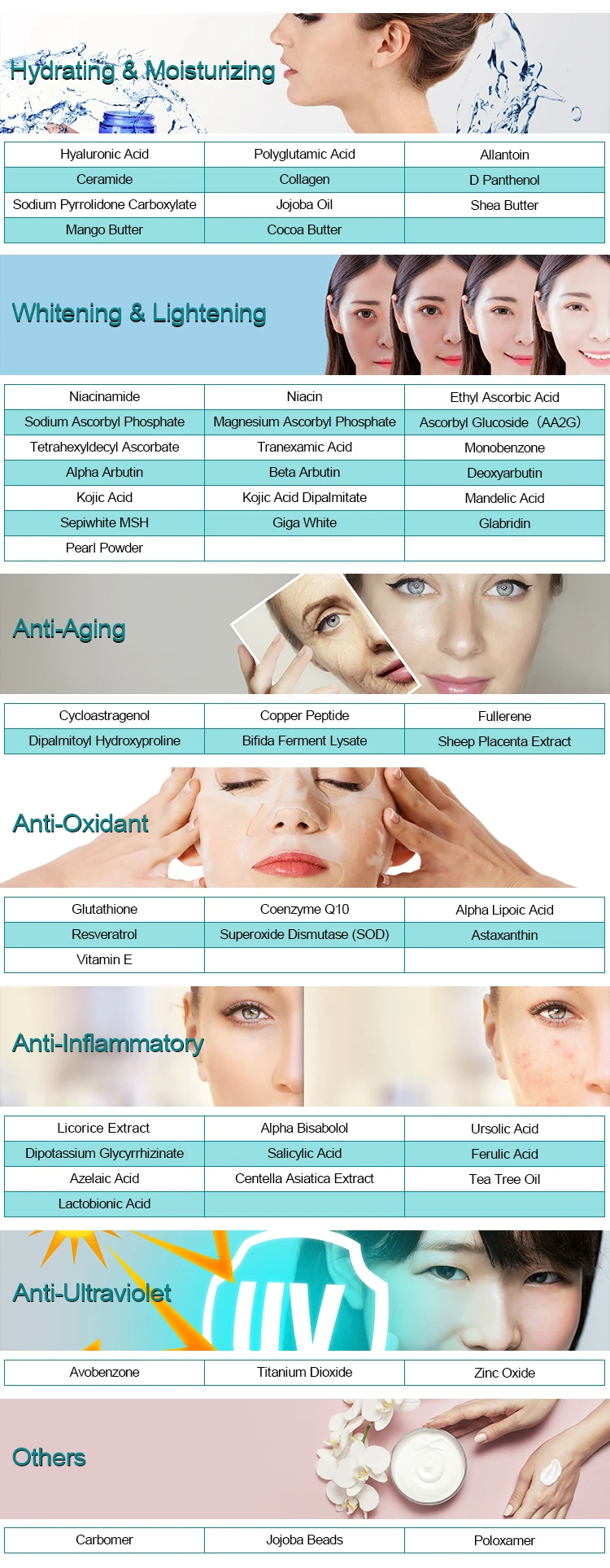
Kojic Acid Dipalmitate is a derivative of Kojic Acid, a natural substance derived from fungi. Kojic Acid itself is known for its skin-lightening and antioxidant properties. Kojic Acid Dipalmitate is a modified form of Kojic Acid that is more stable and less prone to discoloration.
Here are some potential benefits of Kojic Acid Dipalmitate:
Skin Lightening: Like Kojic Acid, Kojic Acid Dipalmitate is often used in skincare products for its ability to inhibit the production of melanin, the pigment responsible for skin color. This can help lighten hyperpigmentation, dark spots, and melasma.
Even Skin Tone: By inhibiting melanin production, Kojic Acid Dipalmitate can contribute to a more even skin tone, reducing the appearance of uneven pigmentation.
Antioxidant Properties: Kojic Acid Dipalmitate has antioxidant properties, which means it can help neutralize free radicals in the skin. Free radicals can contribute to premature aging and damage to the skin, so antioxidants play a role in protecting the skin from these effects.
Stability: The dipalmitate form of Kojic Acid is more stable than Kojic Acid alone. This increased stability makes it a more suitable ingredient for use in skincare formulations, as it is less prone to oxidation and discoloration.
Compatibility with Other Ingredients: Kojic Acid Dipalmitate is often used in combination with other skincare ingredients, such as vitamin C, retinoids, and alpha hydroxy acids, to enhance its effectiveness in addressing various skin concerns.
Less Sensitivity: Some individuals may experience skin irritation or sensitivity with the use of Kojic Acid. Kojic Acid Dipalmitate is considered to be a milder alternative, making it suitable for individuals with sensitive skin.
It’s important to note that while Kojic Acid Dipalmitate has these potential benefits, individual reactions to skincare ingredients can vary. Always perform a patch test before using any new skincare product, and consult with a dermatologist or skincare professional to determine the most appropriate products for your specific skin concerns. Additionally, the long-term effects and safety of using Kojic Acid Dipalmitate on the skin may vary from person to person, and more research may be needed to fully understand its impact.

How to use Kojic Acid Dipalmitate for best results?
Kojic Acid Dipalmitate is a derivative of Kojic Acid, known for its skin-lightening and brightening properties. It’s often used in skincare products to address issues like hyperpigmentation, dark spots, and uneven skin tone. Here are some tips on how to use Kojic Acid Dipalmitate for the best results:
1.Patch Test:
Before incorporating any new skincare product, including Kojic Acid Dipalmitate, into your routine, it’s crucial to perform a patch test. Apply a small amount of the product on a discreet area of your skin to check for any adverse reactions or allergies.
2.Start Slowly:
Begin with a lower concentration of Kojic Acid Dipalmitate, especially if you have sensitive skin. You can gradually increase the concentration as your skin builds tolerance.
3.Cleanse and Tone:
Start with a clean face. Use a gentle cleanser to remove any makeup, dirt, or impurities. Follow up with a toner to balance the skin’s pH levels.
4.Apply a Serum or Cream:
Kojic Acid Dipalmitate is often found in serums or creams. Apply a small amount to the affected areas or the entire face, depending on your skincare goals. Pay attention to areas with hyperpigmentation or dark spots.
5.Use Sunscreen:
Sun protection is crucial when using any skin-lightening product. Kojic Acid Dipalmitate can make your skin more sensitive to sunlight. Apply a broad-spectrum sunscreen with at least SPF 30 every morning, even on cloudy days. Reapply throughout the day if needed.
6.Nighttime Application:
Consider applying Kojic Acid Dipalmitate at night to allow it to work while you sleep. This can be particularly effective for promoting skin renewal and addressing hyperpigmentation.
7.Moisturize:
Follow up with a moisturizer to keep your skin hydrated. This helps maintain a healthy skin barrier and can mitigate potential irritation from the active ingredient.
8.Be Patient:
Results may take time. It can take several weeks or even months to see significant improvements in skin tone and pigmentation. Consistency is key.
9.Consult a Dermatologist:
If you have concerns about your skin or experience any adverse reactions, consult with a dermatologist. They can provide personalized advice based on your skin type and specific needs.
Remember that individual responses to skincare products vary, so it’s essential to listen to your skin and adjust your routine accordingly. Additionally, pregnant or breastfeeding individuals should consult with a healthcare professional before using products containing Kojic Acid Dipalmitate.
From cellsbio health technology co.,ltd
评论
发表评论