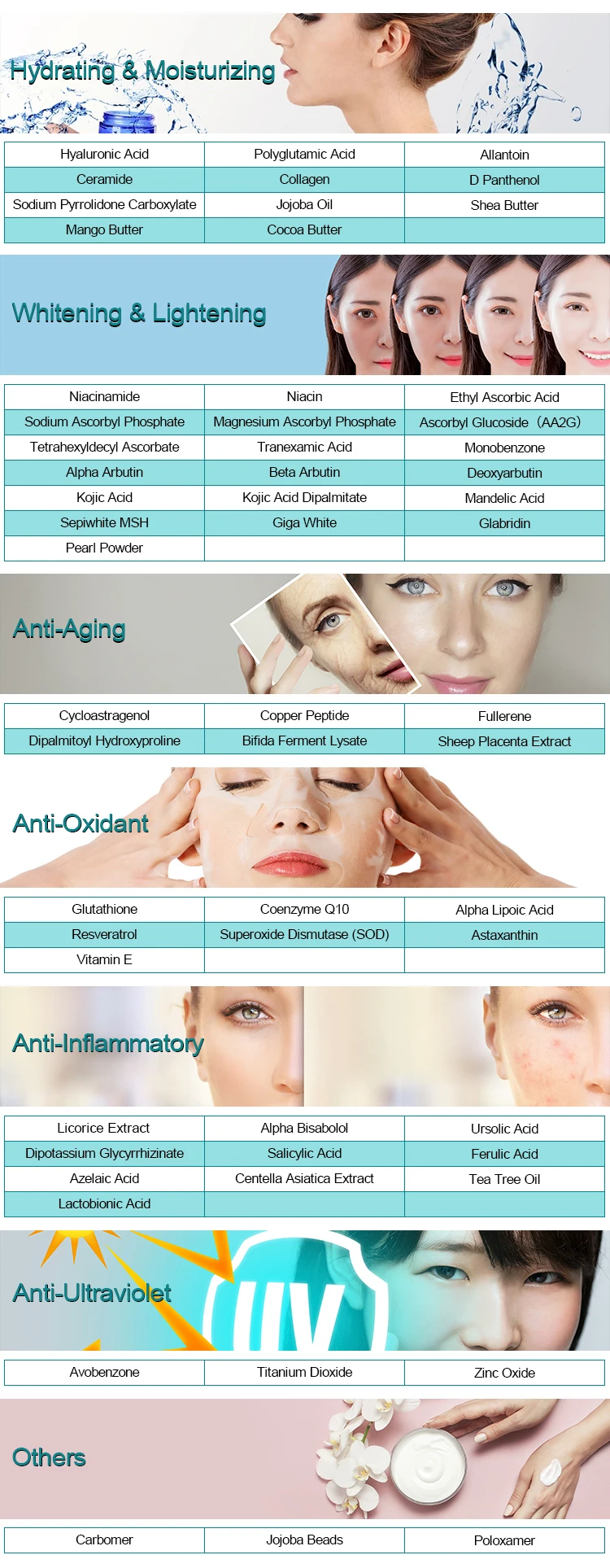
Kojic Acid Dipalmitate is a derivative of kojic acid, which is a natural substance derived from various fungi. Kojic acid itself is known for its skin-lightening properties and is often used in skincare products to address issues such as hyperpigmentation, dark spots, and uneven skin tone. Kojic Acid Dipalmitate, being a modified form, has some specific advantages and applications in the cosmetic and skincare industry. Here are some of its potential uses:
1.Skin Lightening and Brightening:
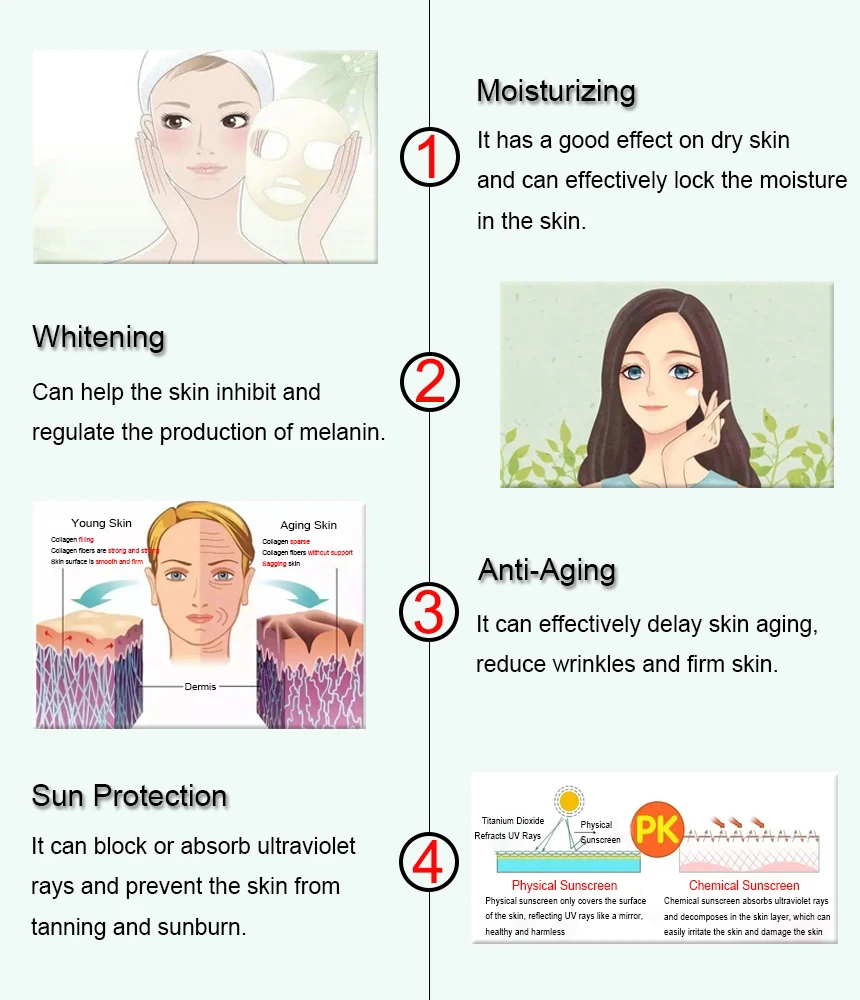
Kojic Acid Dipalmitate is commonly used in skincare formulations for its ability to inhibit the production of melanin, the pigment responsible for skin color.
It can help lighten dark spots, age spots, and hyperpigmentation, promoting a more even skin tone.
2.Stability:
Unlike kojic acid, which can be unstable and prone to discoloration when exposed to air and light, Kojic Acid Dipalmitate is more stable. This makes it a preferred choice for cosmetic formulations.
3.Oil-Soluble:
The dipalmitate form of kojic acid is oil-soluble, making it easier to incorporate into various skincare products, including creams, lotions, and serums.
4.Anti-Oxidant Properties:
Kojic Acid Dipalmitate has antioxidant properties, which can help protect the skin from oxidative stress caused by free radicals. This can contribute to the overall health and vitality of the skin.
5.Reduced Sensitivity:
Some individuals may experience skin irritation or sensitivity when using kojic acid. Kojic Acid Dipalmitate is often considered a milder alternative with reduced potential for irritation.
6.Cosmetic Formulations:
It is commonly found in skin-lightening creams, anti-aging products, and other skincare formulations aimed at addressing hyperpigmentation issues.
7.Combination with Other Ingredients:
Kojic Acid Dipalmitate is often combined with other skin-brightening agents like vitamin C or alpha-arbutin to enhance its effectiveness in reducing hyperpigmentation.
It’s important to note that individual skin reactions can vary, and it’s advisable to perform a patch test before incorporating products containing Kojic Acid Dipalmitate into your regular skincare routine. Additionally, consulting with a dermatologist or skincare professional can help determine the most suitable products for your specific skin concerns.
Adverse Effects of Kojic Acid Dipalmitate
Kojic Acid Dipalmitate is a derivative of Kojic Acid, which is often used in skincare products for its skin-lightening properties. However, it’s essential to be aware of potential adverse effects, although Kojic Acid Dipalmitate is generally considered a milder and more stable form of Kojic Acid. Some possible adverse effects include:
1.Skin Irritation: Like many active ingredients in skincare, Kojic Acid Dipalmitate may cause skin irritation in some individuals. This can manifest as redness, itching, or a burning sensation. It’s recommended to perform a patch test before using products containing this ingredient on larger areas of the skin.
2.Allergic Reactions: Allergic reactions, while rare, can occur. Symptoms may include swelling, rash, or hives. If you experience any of these symptoms, discontinue use and seek medical attention.
3.Photosensitivity: Kojic Acid, in general, can make the skin more sensitive to sunlight. This may increase the risk of sunburn and other harmful effects of UV radiation. It’s crucial to use sunscreen with a high SPF when using products containing Kojic Acid Dipalmitate, and limit sun exposure.
4.Contact Dermatitis: Prolonged or excessive use of products containing Kojic Acid Dipalmitate may lead to contact dermatitis, characterized by dryness, flakiness, and irritation. To minimize this risk, it’s advisable to follow the recommended usage guidelines.
5.Skin Discoloration: Paradoxically, in some cases, long-term use of skin-lightening agents may lead to skin discoloration, particularly if the product is discontinued abruptly. This rebound effect is not exclusive to Kojic Acid Dipalmitate and is a general consideration when using skin-lightening agents.
6.Interaction with Other Ingredients: Kojic Acid Dipalmitate may interact with other ingredients in skincare products. It’s crucial to check product labels for potential conflicts and consult with a dermatologist if you are using multiple skincare products simultaneously.
As with any skincare ingredient, it’s advisable to consult with a dermatologist or healthcare professional before incorporating products containing Kojic Acid Dipalmitate into your skincare routine. They can provide personalized advice based on your skin type, concerns, and any pre-existing conditions you may have.
From cellsbio health technology co.,ltd
评论
发表评论