Adenosine Triphosphate (ATP) is a critical molecule in the human body, functioning as the primary energy currency for cells. Here’s an overview of ATP’s role and significance to the human body:
1. Energy Storage and Transfer
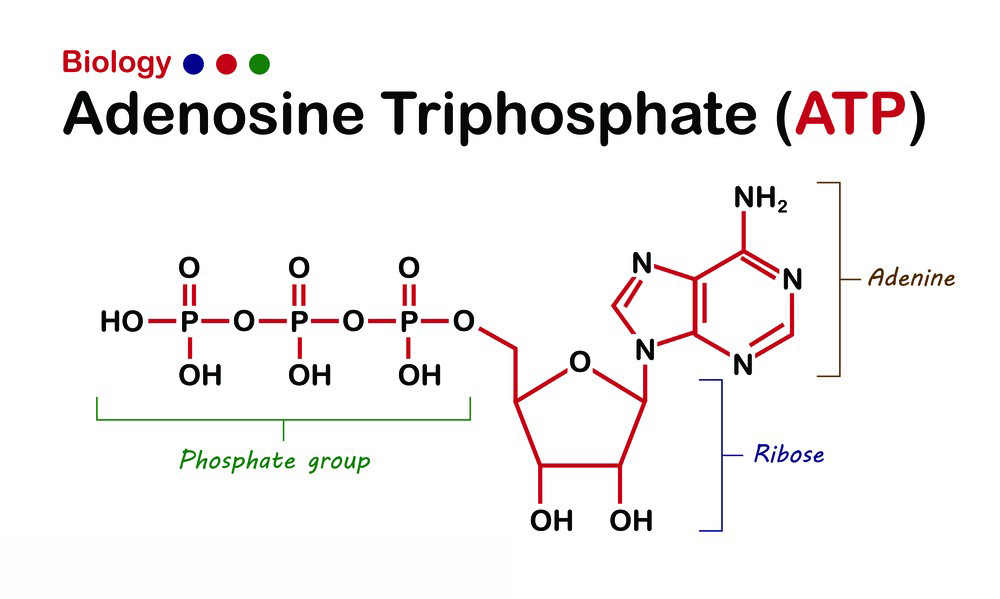
Adenosine Triphosphate stores energy in its high-energy phosphate bonds, particularly between the second and third phosphate groups. When these bonds are broken, energy is released and can be used for various cellular processes. The formula for the reaction is:
ATP → ADP + Pi + Energy
This energy powers most biological functions, such as:
- Muscle contraction (used in movement, heartbeat, etc.)
- Active transport (movement of ions or molecules across cell membranes)
- Biosynthesis (formation of proteins, nucleic acids, and other macromolecules)
- Cell division and growth
2. Cellular Respiration and Adenosine Triphosphate Production
Adenosine Triphosphate is primarily produced through cellular respiration, a multi-step process that occurs in the mitochondria of cells. The key stages involved in ATP production are:
- Glycolysis: Breaks down glucose into pyruvate, producing a small amount of Adenosine Triphosphate.
- Krebs Cycle (Citric Acid Cycle): Generates electron carriers that provide high-energy electrons for the next step.
- Electron Transport Chain (Oxidative Phosphorylation): The bulk of Adenosine Triphosphate is produced here, as electrons are transferred through a series of proteins, creating a proton gradient that powers Adenosine Triphosphate synthase, the enzyme responsible for synthesizing Adenosine Triphosphate.
On average, one molecule of glucose can yield about 30-32 molecules of Adenosine Triphosphate.
3. Regulation of Metabolic Processes
Adenosine Triphosphate also plays a role in signaling and regulating metabolic processes. For example:
- Feedback Inhibition: Adenosine Triphosphate levels regulate enzymes involved in energy production pathways. High levels of Adenosine Triphosphate inhibit further production, while low levels signal a need for more energy production.
- Signal Transduction: In some pathways, Adenosine Triphosphate acts as a signaling molecule. For instance, in the process of phosphorylation, Adenosine Triphosphate transfers a phosphate group to proteins or other molecules, altering their function and activity.
4. Adenosine Triphosphate in Muscle Contraction
Adenosine Triphosphate is essential for muscle contractions. It binds to myosin (a motor protein), allowing myosin to detach from actin filaments and perform a power stroke. Without Adenosine Triphosphate, muscles would remain in a contracted state, which is what happens during rigor mortis after death when Adenosine Triphosphate production ceases.
5. Daily Adenosine Triphosphate Turnover
Humans constantly recycle Adenosine Triphosphate. The total amount of Adenosine Triphosphate in the human body at any given moment is about 100 grams, yet the body uses and regenerates this Adenosine Triphosphate rapidly. For a typical human, this can amount to the turnover of their entire body weight in Adenosine Triphosphate every day.
In summary, Adenosine Triphosphate is vital for sustaining life by providing the energy required for all cellular functions in the human body, from muscle contractions to cell maintenance and division. Without Adenosine Triphosphate, cells would not have the energy to carry out these functions, leading to biological failure.
评论
发表评论